
How to Leverage Real Estate Technology for Leads
Real estate technology has fundamentally changed how professionals buy, sell, manage, and value properties in today’s digital marketplace. The industry, once slow to adopt innovation, now leverages artificial intelligence, blockchain, virtual reality, and automated platforms to streamline transactions and support data-driven decisions. Real estate technology encompasses digital tools and systems that automate property processes, improve market intelligence, and create more transparent, efficient experiences for buyers, sellers, investors, and property managers. Over 75% of US real estate brokerages have integrated AI technologies to optimize their operations.

Digital-first experiences now reflect the expectations of tech-savvy clients who require instant access to property data, virtual tours, and tailored recommendations. These technologies address persistent industry challenges such as lengthy transaction times, information asymmetry, and manual paperwork. Property management software, IoT-enabled smart buildings, and blockchain-validated transactions now deliver measurable advantages to professionals seeking operational efficiency and competitive differentiation.
The real estate technology sector continues to expand with innovations in predictive analytics, fractional ownership platforms, and immersive property visualization tools. These advancements support a range of market participants, from residential investors targeting sustainable assets to commercial operators monitoring portfolio performance with big data. Staying current on these technologies and their applications is now a baseline requirement for active real estate professionals.
Key Takeaways
- Real estate technology uses AI, blockchain, and automation to make property transactions faster, more transparent, and data-driven
- Digital tools like virtual tours, smart home systems, and property management platforms have become standard expectations across all market segments
- Emerging innovations including fractional ownership, predictive analytics, and IoT integration are creating new business models and investment opportunities
Defining Real Estate Technology

Real estate technology encompasses digital tools and platforms that transform property transactions, management, and operations through innovations such as artificial intelligence, blockchain, and Internet of Things devices. The industry has moved from basic digital listings to comprehensive platforms that redefine how professionals buy, sell, and manage properties.
Key Concepts and Terminology
PropTech refers to digital innovations that optimize property management, transactions, and investment decisions. The term includes software platforms, data analytics tools, and hardware solutions designed for real estate professionals.
Digital transformation technologies include artificial intelligence for property valuations and predictive analytics, blockchain for secure, transparent transactions and smart contracts, and the Internet of Things for automated building monitoring and control.
Smart building technology integrates sensors, automation systems, and energy management tools to collect real-time data on occupancy, temperature, security, and maintenance. Virtual reality and augmented reality applications support remote property tours and renovation visualization.
Evolution of Real Estate Technology
In the 1990s, real estate technology digitized property listings and customer relationship management. These tools moved information from print to online databases, relying on static websites and email for communication.
By the 2000s, mobile applications and cloud-based platforms enabled remote access to property data. Multiple listing services became interconnected, and digital document signing became standard. Social media emerged as a marketing channel for properties.
Today, machine learning algorithms predict property values and market trends, computer vision analyzes property images for automated valuations, and digital twins create virtual replicas of buildings for management and planning. These technologies now underpin operations in property management, investment evaluation, and client engagement.
Difference Between Proptech and Property Technology
Industry professionals often use proptech and property technology interchangeably to describe digital solutions for real estate owners, operators, brokers, investors, tenants, and developers.
Proptech typically highlights consumer-facing applications and transaction technologies, such as property search platforms, virtual tours, online mortgage applications, and peer-to-peer rental marketplaces. The term gained momentum within startup and venture capital circles.
Property technology sometimes refers specifically to operational and management systems, including building automation and facility management software. However, most professionals use proptech as the common shorthand for the sector.
Core Technologies Powering Real Estate
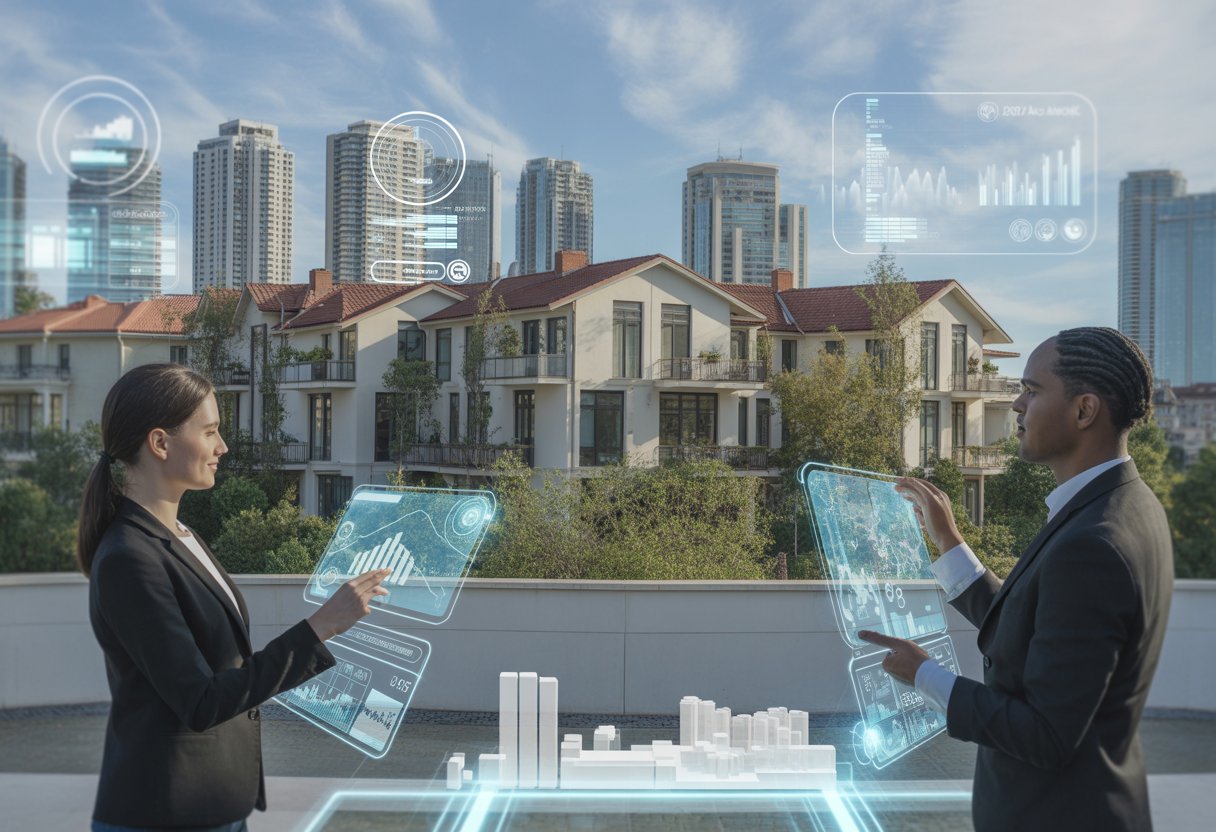
Modern real estate operations rely on foundational technologies that automate valuations, secure transactions, and enable data-driven decisions. AI analyzes property images and market data for instant pricing. Blockchain establishes immutable transaction records. Big data platforms process millions of listings in real time, and IoT sensors monitor building systems automatically.
Artificial Intelligence and Machine Learning
AI powers automated valuation models that estimate property values without traditional appraisals. Machine learning algorithms analyze bedroom counts, square footage, tax records, and contextual data to generate pricing estimates. Computer vision technology evaluates property photos for features such as natural lighting and curb appeal.
These systems increase accuracy through continuous learning. For example, Zillow’s Zestimate reduced its median error from 14 percent to just over 3 percent by training models on millions of transactions. AI also drives conversational platforms that manage rental inquiries, schedule showings, and respond to maintenance requests via text and voice interfaces.
Property management companies use machine learning to anticipate maintenance needs before equipment fails by identifying patterns in work order data and sensor readings. Real estate marketers deploy AI tools to create optimized property descriptions and personalize content for specific buyer segments.
Big Data and Analytics
Big data platforms aggregate information from multiple listing services, public records, market reports, and user behavior to deliver comprehensive property intelligence. Real estate professionals access unified datasets that combine historical sales, demographic trends, school ratings, and neighborhood amenities in single dashboards.
Analytics tools reveal market patterns and investment opportunities. Agents receive instant alerts when properties matching specific criteria become available or experience price changes. Investors analyze cash flow projections, appreciation trends, and risk factors across entire portfolios.
Key data sources include:
- Property tax assessments and deed records
- MLS listing histories and transaction data
- Local economic indicators and employment statistics
- Consumer search behavior and preference patterns
Predictive analytics forecast property values and rental yields based on planned infrastructure projects, zoning changes, and demographic shifts.
Blockchain and Smart Contracts
Blockchain technology creates permanent, tamper-proof records of property ownership and transaction history. Each transfer enters the chain as a new block, establishing verifiable title lineage without centralized databases. This approach reduces fraud risk and accelerates title searches.
Smart contracts execute automatically when predefined conditions are met. For example, a real estate purchase agreement coded as a smart contract can trigger fund transfers and title changes once inspections clear and financing finalizes, reducing closing times from weeks to days.
Blockchain also enables fractional ownership by dividing properties into digital tokens. Investors can purchase shares of commercial buildings or residential portfolios, with blockchain tracking each stake. Rental income and appreciation distribute automatically to token holders based on ownership percentage.
Internet of Things and Connected Devices
IoT sensors monitor temperature, humidity, energy usage, and occupancy in real time across buildings. Property managers receive alerts for inefficient HVAC operation or water leaks, enabling immediate intervention and cost savings. Smart thermostats and lighting systems adjust to occupancy patterns to lower utility expenses.
Connected devices enhance tenant experiences through keyless entry, package delivery notifications, and amenity reservations via mobile apps. Office buildings use occupancy sensors to optimize space utilization and adjust cleaning schedules based on actual usage.
Energy management systems aggregate data from IoT devices to identify conservation opportunities. Building owners track consumption across portfolios and benchmark performance against similar assets. Security cameras with computer vision detect unusual activities and alert staff automatically.
Digital Transformation of Buying, Selling, and Management
Technology has changed how professionals discover, evaluate, and manage properties through integrated digital platforms and advanced visualization tools. These solutions streamline transactions, enhance property exploration, and automate management tasks that previously required manual effort.
Real Estate Marketplaces and Aggregation Platforms
Marketplaces now consolidate property listings into centralized digital platforms connecting buyers, sellers, and renters. Aggregation platforms pull data from multiple sources to offer comprehensive search capabilities with advanced filters for price, location, amenities, and property characteristics.
Platforms use artificial intelligence to match users with relevant properties based on search behavior and preferences. Detailed property information, including floor plans, neighborhood data, and price histories, supports data-driven decisions without requiring initial physical visits.
Digital marketplaces introduce transparency to pricing and property availability. Many platforms feature instant messaging that connects buyers directly with sellers or agents, reducing response times. Aggregated sales data and market trends provide essential context for property valuations.
Virtual and Augmented Reality Experiences
Virtual reality allows prospective buyers and tenants to explore properties remotely through immersive 3D environments. VR property tours replicate the experience of walking through a space, enabling users to review room dimensions, finishes, and layouts from anywhere.
Augmented reality overlays digital information onto physical spaces through smartphones or AR glasses. Buyers can visualize furniture placement, view property modifications, or see hidden features like plumbing and electrical systems during on-site visits.
Digital twins create virtual replicas of physical properties that update in real-time with sensor data. These models support design, construction, maintenance, and renovations. Floor plans have evolved from static 2D drawings to interactive 3D models that users can navigate and customize.
Property Management Software Solutions
Property management software centralizes operations such as rent collection, maintenance requests, lease tracking, and financial reporting. These platforms automate tasks including payment reminders, lease renewals, and vendor communications.
Tenant experience platforms provide residents with mobile apps for submitting maintenance requests, paying rent, accessing amenities, and communicating with property managers. The software tracks request status and completion times, which increases accountability and improves response rates.
IoT-enabled building systems monitor energy usage, security, and environmental conditions. Property managers receive alerts about maintenance issues before they escalate, reducing repair costs and minimizing tenant disruptions. Analytics dashboards aggregate data across portfolios to identify operational patterns and optimization opportunities.
Leading Real Estate Technology Tools and Companies
The real estate technology sector includes marketplace platforms serving millions of users, specialized software for property management and transactions, and advanced tools for marketing and client relationship management. Solutions range from consumer-facing property search engines to professional-grade systems that streamline operations for agents and brokers.
Notable Platforms and Solutions
Zillow leads the U.S. real estate marketplace, offering property search, valuation, and transaction services through its website and mobile apps. The Zestimate tool delivers automated home valuations using proprietary algorithms and market data. Zillow’s ecosystem includes Trulia for property listings, StreetEasy for New York City real estate, and Follow Up Boss for agent customer management.
Redfin operates as a technology-driven real estate brokerage, combining online search tools with salaried agent services. The platform delivers real-time MLS data and offers lower commission rates than most traditional brokerages. Realtor.com reaches over 100 million monthly users, providing extensive property listings, market analytics, and neighborhood insights.
Yardi supplies enterprise-level property management software to about half of all commercial real estate companies in the U.S., managing assets valued at $4 trillion across more than 80 countries. AppFolio and Entrata offer cloud-based property management solutions for multifamily, single-family, and commercial portfolios, integrating accounting, leasing, and maintenance features.
Innovative Tools for Real Estate Professionals
Transaction security platforms such as ClosingLock and CertifID protect real estate professionals and clients from wire fraud during closings. These systems verify banking details and secure communications to prevent cybercriminals from intercepting sensitive information. ClosingLock encrypts wire instructions, while CertifID applies multi-factor authentication to confirm account ownership before fund transfers.
Qualia offers connected title, escrow, and closing technology, bringing together all transaction parties. Over one million real estate and mortgage professionals use Qualia to process millions of consumer transactions each year. VTS supports management of 12 billion square feet of commercial space worldwide, providing lease management and market intelligence for more than 45,000 CRE professionals.
ShowingTime+ automates property showing coordination and scheduling for real estate agents, handling appointment confirmations, feedback collection, and analytics on showing activity.
Marketing Automation and Customer Relationship Management
Real estate CRM software helps agents manage client relationships, track leads, and automate communication workflows. Follow Up Boss, part of the Zillow portfolio, focuses on lead management and automated follow-up, integrating with major lead sources and tracking response times to ensure prompt prospect engagement.
Marketing automation tools manage email campaigns, social media scheduling, and property promotion. These systems segment contacts by property preferences and search behavior to deliver targeted recommendations. Top Producer and LionDesk specialize in CRM solutions for real estate agents, offering email templates, drip campaigns, and transaction management features.
Contactually analyzes communication patterns and prompts agents to reconnect with past clients at optimal times. The system categorizes contacts by engagement level and identifies follow-up opportunities. Most real estate CRM platforms include pipeline management, task automation, and MLS integration to synchronize property data with marketing materials.
Emerging Trends and Innovations in Real Estate Technology
Technologies such as blockchain-based ownership models, aerial surveying tools, and digital investment platforms are changing how professionals buy, sell, and manage properties. These innovations expand access for smaller investors and equip professionals with advanced data and visualization tools.
Tokenization and Fractional Ownership
Tokenization converts real estate assets into digital tokens on a blockchain, enabling investors to purchase fractional shares. This model lowers capital barriers for real estate investment.
Blockchain technology executes transactions through smart contracts that automatically enforce agreements without intermediaries. Each token represents a specific ownership percentage, and investors can trade tokens on specialized platforms. Blockchain’s transparency allows all parties to verify ownership and transaction history.
Fractional ownership platforms now accept investments as low as $100 to $500, compared to the $25,000 minimums common with traditional REITs. This shift broadens access and enables portfolio diversification. The technology also reduces paperwork and shortens transaction timelines.
Property owners can access liquidity by tokenizing a portion of their holdings while retaining operational control.
Drones and Digital Twins
Drones capture aerial data and images that provide comprehensive property views. Professionals use drones to photograph roofs, survey large land parcels, and produce marketing materials from unique perspectives.
Building Information Modeling (BIM) and digital twin technology integrate drone data to create detailed virtual replicas of properties. These models combine structural, mechanical, and sensor data into interactive formats, supporting collaboration among architects, engineers, and builders to identify design issues before construction.
Drone surveying reduces assessment time by up to 60% compared to traditional methods. The technology enables thermal imaging to detect insulation issues, moisture damage, and energy inefficiencies. Property managers use regular drone inspections to monitor building conditions and schedule maintenance.
Digital twins allow property owners to simulate scenarios, such as HVAC modifications or analyzing foot traffic in commercial spaces, supporting data-driven decisions that optimize building performance and reduce operational costs.
Real Estate Crowdfunding and Investment Platforms
Real estate crowdfunding platforms aggregate capital from multiple investors to fund property acquisitions and development projects. These platforms allow individuals to collectively finance deals that previously required institutional backing.
Investment platforms present detailed property information, financial projections, and risk assessments. Most focus on specific asset types, such as residential rentals or commercial buildings. Investors can review opportunities, commit funds online, and monitor performance through dashboards.
PropTech platforms offer equity, debt, and hybrid investment models. Equity investors receive ownership stakes and share in rental income and appreciation. Debt investors act as lenders, earning fixed returns from interest payments.
Quantum computing advancements will enhance these platforms’ ability to evaluate opportunities. Real estate investors gain geographic diversification without direct management responsibilities. Platform fees typically range from 1% to 3% annually, undercutting traditional fund management costs.
Challenges, Opportunities, and the Future Landscape
Real estate technology introduces critical challenges around data protection while transforming professional roles and accelerating the adoption of AI, blockchain, and interconnected systems in property transactions and management.
Data Security and Compliance
Digital transformation increases vulnerabilities in real estate operations. Property transactions involve sensitive financial and personal information, making them attractive targets for cybercriminals.
Critical Security Concerns:
- Transaction fraud via compromised electronic signatures
- Data breaches exposing client portfolios and investment strategies
- Ransomware attacks targeting property management systems
- Wire fraud during closing processes
Platforms like ClosingLock secure wire transfer instructions through verified communication channels. Real estate brokers should implement multi-factor authentication, encrypted storage, and regular security audits.
Compliance requirements differ by jurisdiction. GDPR in Europe mandates strict data handling, while U.S. states apply varying standards. Companies managing cross-border transactions must address layered compliance obligations with dedicated legal and automated compliance resources.
The Evolving Role of Real Estate Professionals
Technology automates routine tasks, allowing real estate brokers to focus on strategic advising and relationship management. Automated systems handle documentation and initial property searches.
Electronic signatures accelerate closings and shift professional focus to negotiation and market analysis. Agents who leverage data analytics tools gain advantages in pricing and timing strategies.
Emerging responsibilities include:
- Interpreting AI-generated property valuations
- Managing digital marketing across social platforms
- Overseeing blockchain-based transactions
- Providing cybersecurity guidance to clients
Social media skills now play a central role in lead generation and brand building. Professionals must balance automated marketing with genuine client engagement. Those who combine technological proficiency with strong interpersonal skills achieve the greatest success.
Predictions for the Next Decade
AI will expand beyond property searches into predictive market analysis and automated investment portfolio optimization. Blockchain will reduce closing times from weeks to hours through smart contracts and tokenized property ownership.
Commercial buildings will standardize IoT sensors, providing real-time data on occupancy, energy consumption, and maintenance needs. Digital twins will enable virtual property management and remote facility operations.
Augmented reality will replace physical property tours for initial screenings. Investors will conduct due diligence through immersive virtual environments that display structural data and renovation potential simultaneously.
Tokenization will enable fractional ownership, allowing smaller investors to participate in commercial properties once limited to institutional buyers. This shift will alter capital flows and market liquidity in property sectors.