
Sell Your House with Video and Win Big
The real estate market now relies on digital showcasing, and video tours have become one of the most effective tools for selling a home quickly and at the right price. Buyers expect to view properties online before scheduling in-person visits, making video an essential part of any home sale strategy. Video tours offer potential buyers an immersive experience that static photos cannot match.
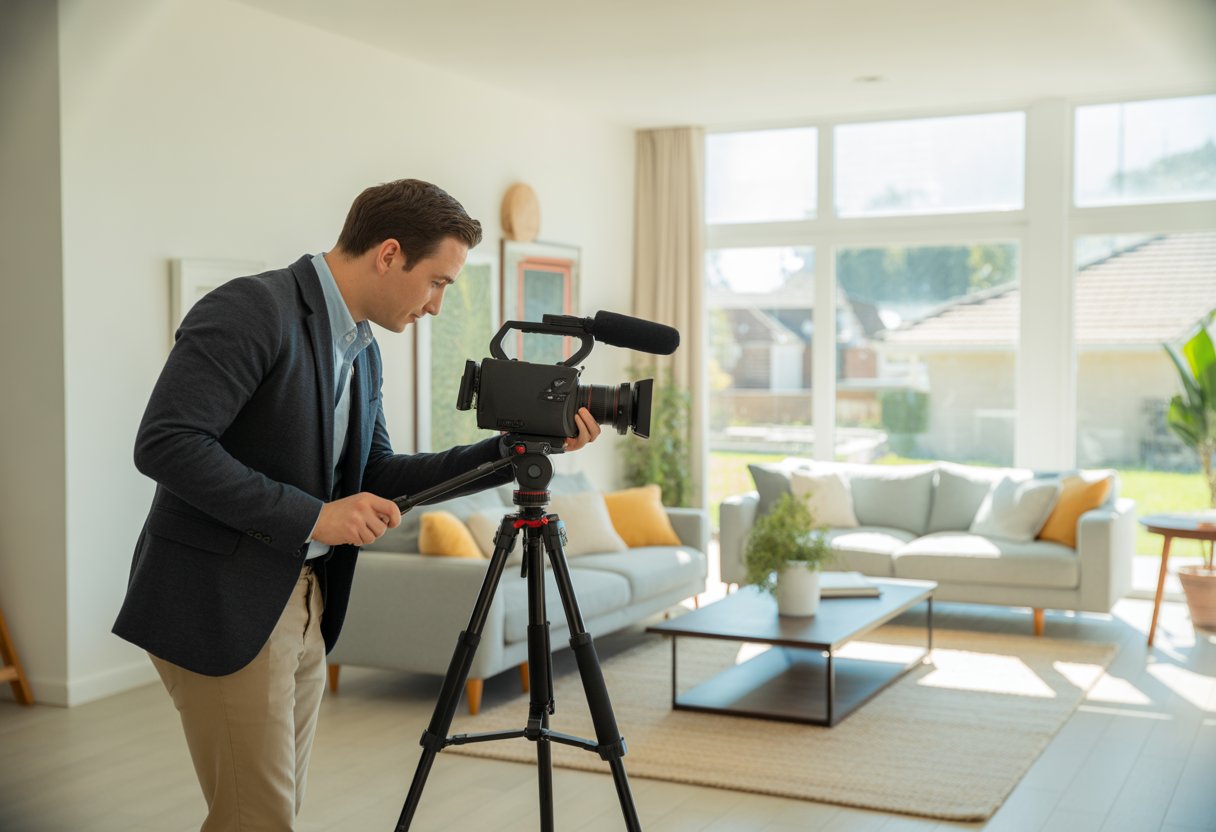
A well-produced video highlights a property’s best features and helps buyers emotionally connect with the space. Using video to market a home increases visibility and engagement, often leading to more inquiries and faster sales. The process requires careful planning, from selecting the right equipment to crafting a narrative that showcases the property’s unique appeal.
Understanding how to create and distribute effective home videos gives sellers a significant advantage in a competitive market. Whether working with a real estate agent or selling a home independently, mastering video marketing techniques helps properties stand out and attract serious buyers.
Key Takeaways
- Video tours provide buyers with an immersive viewing experience that generates more interest than photos alone
- Quality equipment, proper lighting, and strategic planning are essential for creating professional home videos
- Effective videos should be brief, highlight unique property features, and include a clear call to action
Why Video Is Essential for Selling Your House

Video transforms how potential buyers experience properties by providing immersive walkthroughs that static images cannot match. Listings with video content generate significantly higher engagement rates and help properties sell faster in competitive markets.
Boosting Buyer Engagement
Video content captures attention more effectively than traditional photography. When potential buyers scroll through listings, a compelling video creates an emotional connection that helps them envision themselves living in the space.
Listing videos allow viewers to experience the flow between rooms and understand spatial relationships. This comprehensive view helps buyers determine whether a property matches their needs before scheduling an in-person visit. Videos also perform better on social media platforms, increasing the likelihood of shares and expanding reach to more potential buyers.
Properties with video tours receive more inquiries and maintain viewer attention longer than those with only photos. This increased engagement generates more qualified leads for sellers.
Showcasing Home Features Effectively
Virtual tours highlight unique selling points that differentiate a property from competing listings. Sellers can emphasize architectural details, custom finishes, and amenities that might go unnoticed in still photographs.
Video allows for strategic focus on key features:
- Kitchen upgrades with close-ups of appliances and countertops
- Natural lighting captured at optimal times of day
- Outdoor spaces showing landscaping and entertainment areas
- Storage solutions demonstrating practical living aspects
The camera movement through spaces provides context that helps buyers understand room dimensions and layout functionality. Narration can add valuable information about recent renovations, energy-efficient features, or neighborhood benefits without cluttering the visual experience.
Speeding Up the Selling Process
Properties marketed with video typically spend less time on the market. Buyers arrive at showings better prepared, having already conducted a thorough visual inspection through the listing video.
This pre-qualification reduces unnecessary viewings from buyers whose needs don’t match the property. Serious buyers can watch videos multiple times, sharing them with family members or decision-makers who cannot attend initial showings. The ability for buyers to view properties from anywhere expands the potential buyer pool beyond local markets.
Videos also help sellers receive more competitive offers. When buyers feel confident about a property through comprehensive video documentation, they often move faster on making offers to avoid losing the opportunity to competing buyers.
Types of Videos to Market Your Property
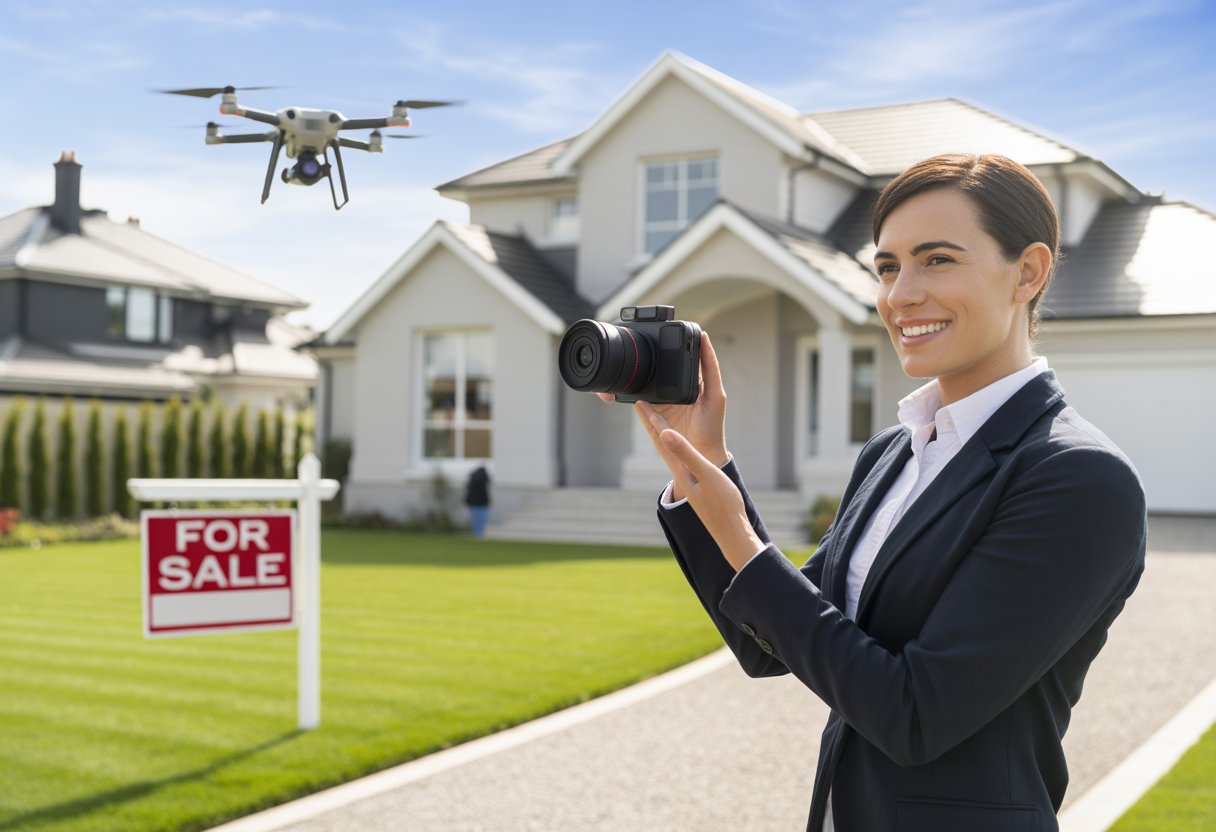
Different video formats serve specific purposes when marketing a home. Property sellers can choose from immersive tours, detailed listings, and community-focused content to attract qualified buyers.
Virtual Home Tours
Virtual home tours provide an immersive walkthrough experience that allows potential buyers to explore a property remotely. These videos showcase properties room by room, giving viewers a realistic sense of the home’s layout and flow.
The most effective virtual tours move smoothly through each space, highlighting key features like updated kitchens, spacious closets, and architectural details. Sellers should ensure adequate lighting and decluttered rooms before filming to present the property in its best condition.
Virtual tours work particularly well for out-of-town buyers who cannot visit in person. They also help filter serious buyers from casual browsers, as viewers who schedule in-person showings after watching a tour already have genuine interest in the property.
Property Listing Videos
Property listing videos combine exterior shots, interior highlights, and key property details into a concise marketing piece. These videos typically run 60-90 seconds and focus on the home’s most appealing features and selling points.
Effective listing videos include:
- Curb appeal shots showing the home’s exterior and landscaping
- Key room highlights featuring updated bathrooms, kitchens, and living spaces
- Unique features like pools, home offices, or outdoor entertaining areas
- Property information including square footage, bedrooms, and bathrooms
Research shows that listings with videos generate 403% more inquiries than those without. These videos perform well on social media platforms and property listing websites, where they capture attention quickly and encourage viewers to learn more about the home.
Neighborhood Showcase Videos
Neighborhood showcase videos extend beyond the property itself to highlight the surrounding community and lifestyle. These videos demonstrate nearby amenities, schools, parks, shopping centers, and local attractions that make the area desirable.
Sellers can film local coffee shops, farmers markets, walking trails, and community gathering spaces to give buyers a sense of daily life in the neighborhood. Including footage of different times of day helps buyers understand traffic patterns and community activity levels.
Neighborhood guide videos position properties within a broader lifestyle context that resonates with specific buyer demographics. Families prioritize schools and parks, while young professionals seek dining and entertainment options. Tailoring neighborhood content to the target buyer increases the video’s effectiveness and attracts qualified prospects.
Creating High-Impact House Videos
Successful house videos require careful planning of what to show, proper filming techniques that highlight the property’s best features, and editing that maintains viewer engagement.
Planning Your Video Content
Sellers should map out their video before recording. They need to identify the home’s strongest selling points, such as updated kitchens, spacious layouts, natural lighting, or unique architectural features.
A shot list helps maintain focus during filming. This list should include exterior views, each room from multiple angles, storage spaces, and outdoor areas. The video should follow a logical flow that mimics how someone would walk through the home.
Timing matters for capturing the property at its best. Morning light works well for east-facing rooms, while afternoon sun enhances west-facing spaces. Sellers should also consider creating a compelling story around the home that connects with buyers emotionally.
The video length should stay between 2-3 minutes. Shorter videos maintain attention while providing enough detail to generate serious interest.
Filming Tips for Success
Homeowners can use modern smartphones with high-quality cameras to produce excellent results when used properly.
Stability is critical for watchable footage. A basic tripod or gimbal stabilizer prevents shaky, disorienting video. Slow, smooth camera movements look more professional than quick pans or jerky motions.
Lighting requirements:
- Open all curtains and blinds
- Turn on all lights in each room
- Film during daylight hours when possible
- Avoid filming directly into windows
Camera angles should be shot from chest or eye level to give viewers an accurate sense of the space. Wide-angle shots capture entire rooms, while detail shots highlight special features like crown molding or fixtures.
Audio quality plays a key role. Minimize background noise from traffic, appliances, or HVAC systems. Many sellers add music during editing rather than recording natural sound.
Essential Editing Techniques
Refine raw footage before sharing. Editing software ranges from free mobile apps to professional desktop programs, depending on the seller’s comfort level and needs.
Start by cutting out unnecessary footage. Only the best clips of each room should make the final video. Use smooth transitions between rooms, typically with simple cuts or brief fades.
Text overlays can highlight key information like square footage, number of bedrooms, or recent upgrades. These elements should be easy to read and not obstruct important visuals. Adding captions automatically helps since most viewers watch videos without sound.
Background music sets the tone but should never overpower the visual content. Upbeat, neutral tracks work better than songs with lyrics or strong emotional associations.
Color correction ensures consistent lighting throughout the listing video. Basic adjustments to brightness, contrast, and saturation can make rooms appear more inviting without misrepresenting the property.
Choosing the Right Equipment and Tools
Quality equipment directly impacts how professional and appealing your home video appears to potential buyers. The right cameras, audio tools, stabilization gear, and lighting setup can transform a basic recording into a compelling virtual tour.
Selecting High-Quality Cameras
High-quality cameras serve as essential tools for producing effective real estate videos. Cameras with at least 1080p resolution deliver clear footage, while 4K models provide sharper details that allow prospective buyers to scrutinize property features.
Full-frame sensors handle varied lighting conditions and capture accurate colors. For example, the Canon EOS R5 offers a 45MP full-frame sensor for ultra-clear images, and the Sony A7 III features a 24.2MP sensor with strong low-light capability, which is valuable for properties with limited natural light.
Consider budget constraints when choosing real estate videography equipment. Entry-level cameras like the Nikon D5600 deliver reliable image quality for agents or property managers starting with video marketing. Flip-out touchscreen displays simplify framing in tight areas, such as closets or bathrooms.
Wide-angle lenses in the 16mm to 35mm range capture entire rooms without requiring additional distance, presenting small spaces accurately and making floor plans easier for viewers to assess.
Using Microphones and Stabilizers
Clear audio elevates narrated home tours and supports a professional presentation. Wireless lavalier microphones, such as the Sennheiser G4, attach to clothing and capture consistent voice quality during walk-throughs, allowing freedom of movement throughout the property.
Directional shotgun microphones, like the Rode NTG5, focus on sounds directly in front of the camera and reduce background noise from sources such as traffic or HVAC systems.
Stabilization equipment removes camera shake that can detract from video quality. Gimbals, including the DJI RS 4 Pro, automatically compensate for movement and produce smooth transitions between rooms. Research indicates that gimbals can reduce shake by up to 96% compared to handheld shooting.
Tripods create stable static shots for room overviews or architectural features. Sliders introduce controlled horizontal or vertical movement, adding visual interest to property videos without distracting viewers.
Lighting and Staging Considerations
Natural light enhances a property’s appeal, so schedule video shoots during the day with curtains open. Listings with video tours attract significantly more inquiries from prospective tenants and buyers.
Use portable LED lights such as the Neewer 660 to brighten shadowed areas or rooms with minimal windows. Adjust brightness and color temperature to blend with existing lighting and avoid harsh contrasts.
Remove personal items, clutter, and distracting decor prior to filming. Clean all surfaces, arrange furniture neatly, and turn on every light to maximize brightness. Softbox kits distribute light evenly, preventing shadows that can obscure features or make spaces appear smaller.