
Essential Drone Real Estate Video Tips for Agents
Drone videos have accelerated property marketing, with listings featuring aerial footage selling 68% faster than those without. Agents and photographers who master drone videography secure a measurable edge in competitive real estate markets. Successful drone real estate videos result from selecting the right equipment, planning strategic shots, employing smooth flying techniques, and editing with a professional approach to create property tours that attract buyers.

Understanding the technical and creative aspects of drone videography for real estate elevates presentations from amateur to professional. Effective operators plan flight paths, comply with regulations, and capture footage that communicates a property’s value and context.
Properties marketed with drone video consistently generate higher engagement across digital platforms. From selecting the appropriate equipment to executing cinematic shots and optimizing deliverables, each step contributes to videos that help listings stand out in crowded markets.
Key Takeaways
- Professional drone videos require the right equipment, FAA Part 107 certification, and strategic planning to showcase properties effectively
- Smooth flying techniques, proper lighting conditions, and varied shot angles create compelling aerial footage that engages potential buyers
- Proper editing with color grading, transitions, and optimized formats ensures drone videos perform well across MLS listings and social media platforms
Why Drone Real Estate Videos Matter
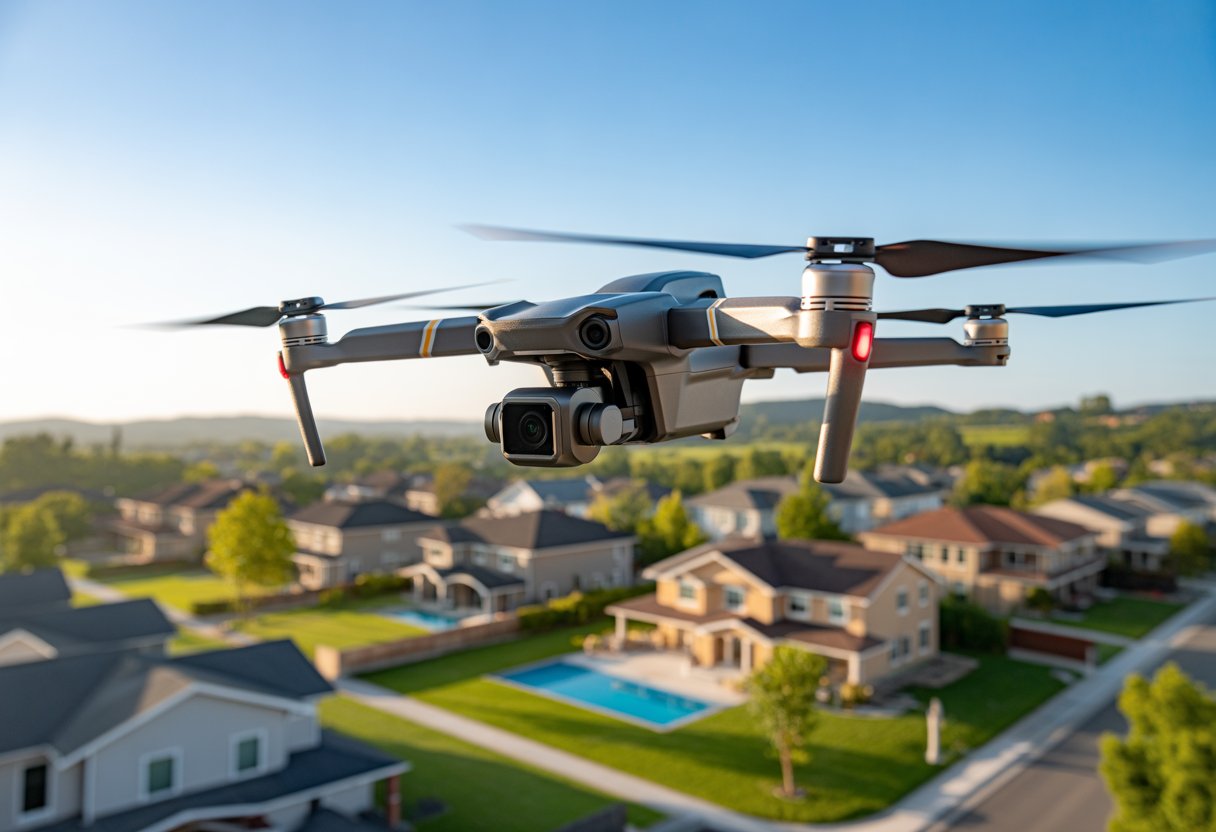
Drone technology has changed property marketing by providing aerial perspectives that ground-level photography cannot achieve. Listings with drone footage achieve higher engagement rates and faster sales than those using only traditional photography.
Benefits of Drone Footage for Listings
Real estate drone videos showcase properties from angles that reveal the full scope of a home and its surroundings. Aerial footage captures the property’s relationship to nearby amenities such as parks, schools, and shopping centers.
Buyers gain a comprehensive understanding of lot size, landscaping, and architectural features through overhead perspectives. Agents can highlight unique selling points such as pool areas, outdoor entertaining spaces, and property boundaries that standard photography may overlook.
Drone videos also document neighborhood context. Viewers can assess traffic patterns, proximity to major roads, and the overall character of the area without an in-person visit. This additional context supports buyers in making decisions before scheduling tours.
Enhancing Real Estate Marketing
Aerial footage creates a competitive advantage in real estate marketing by differentiating listings from standard photo galleries. Videos captured from above generate more social media shares and longer viewing times on platforms such as Instagram and YouTube.
Properties with drone content stand out in crowded MLS feeds and real estate websites. The cinematic quality of aerial shots elevates perceived property value and signals an agent’s investment in comprehensive marketing.
Marketing channels that benefit from drone footage:
- Social media platforms (Instagram Reels, TikTok, Facebook)
- MLS listings and real estate portals
- Email campaigns and newsletters
- Agent websites and landing pages
The visual storytelling of drone videos enables agents to create content that connects emotionally with buyers. Golden hour shots and smooth transitions between exterior and interior footage produce polished presentations that command attention.
Impact on Property Sales
Properties marketed with drone real estate videos sell faster and often achieve higher prices than comparable listings without aerial content. The National Association of Realtors reports that listings featuring drone footage sell 68% faster than those using only traditional photography.
Online engagement metrics support the value of aerial footage. Listings with drone videos receive four times more views than photo-only entries and generate 55% more buyer inquiries. This increased attention leads to more property showings and offers.
Drone technology proves especially effective for luxury properties, large estates, and commercial real estate where demonstrating the full property scope is critical. Buyers value the transparency and detail that drone footage provides, reducing uncertainty and expediting purchase decisions.
Selecting the Right Drone and Equipment
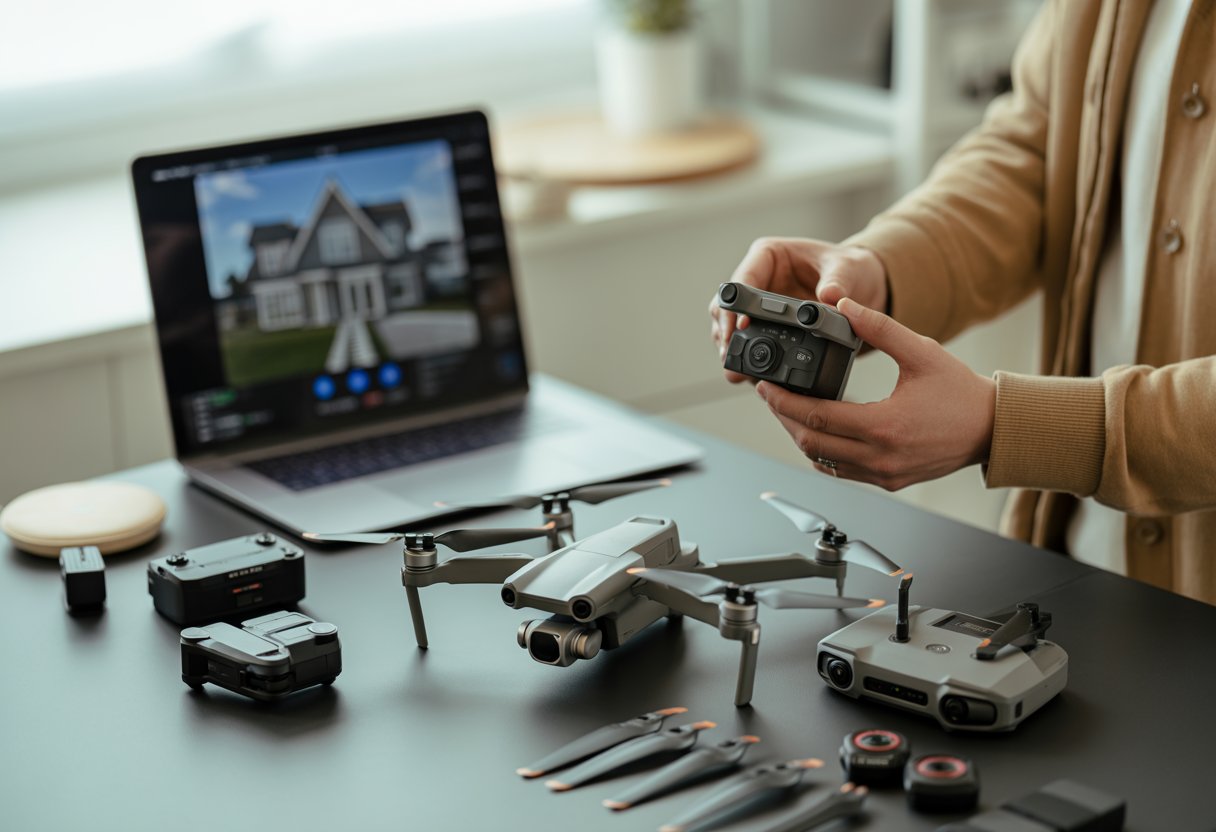
Professional drone equipment creates the foundation for effective real estate videography. The right combination of hardware, camera specifications, and flight capabilities determines whether aerial footage meets client expectations and industry standards.
Key Features to Look For
Flight stability and reliability remain critical when evaluating drones for real estate. A stable gimbal system produces smooth footage even in moderate winds, while obstacle avoidance technology prevents crashes during complex maneuvers around buildings and trees.
Battery life impacts productivity on multi-property shoots. Most professional drones offer 25-30 minutes of flight time per battery. Operators should carry at least three batteries to avoid workflow interruptions.
GPS positioning and return-to-home features enhance flight safety. These systems automatically guide the drone back if signal loss occurs or battery levels drop. Drones with advanced features such as intelligent flight modes allow operators to focus on composition instead of manual piloting.
Range and transmission quality matter for larger properties. A minimum range of 4-5 miles with reliable video transmission ensures operators maintain control and clear visual feedback throughout the shoot.
Choosing Cameras and 4K Video
4K video resolution is the baseline standard for professional real estate drone work. Higher resolution footage allows for digital stabilization in post-production and provides flexibility for cropping or reframing shots.
Camera sensor size affects image quality in varying light conditions. Larger sensors capture more detail and handle shadows better, which is valuable during golden hour shoots or overcast days.
Dynamic range capability determines how well the camera balances bright skies and darker ground elements. A minimum of 10-bit color depth preserves detail in both highlights and shadows, reducing the need for extensive color correction.
Fixed aperture lenses offer consistency, while variable aperture systems provide more creative flexibility when shooting in changing light conditions.
Recommended Drones for Real Estate
The DJI Mavic 3 Cine delivers professional-grade 4K video with a 4/3 CMOS sensor and advanced obstacle avoidance in all directions. Its 46-minute flight time and built-in SSD storage support extended shooting sessions.
Budget-Friendly Options:
- DJI Mini 3 Pro: Lightweight with 4K/60fps capability
- Autel EVO Lite+: 1-inch sensor with 6K video
- DJI Air 2S: 1-inch sensor with intelligent flight modes
The DJI Inspire 2 remains a preferred choice for high-end aerial photography projects requiring interchangeable lenses and dual-operator capability. Its stabilization and RAW video recording justify the higher investment for luxury property marketing.
Popular drone models for real estate applications balance flight stability with powerful cameras and user-friendly controls suitable for both new and experienced pilots.
Planning and Executing Effective Shoots
Effective drone videography requires thorough preparation, strategic shot planning, and strict adherence to legal requirements. These elements ensure smooth operations and professional aerial footage that showcases properties to their best advantage.
Pre-Shoot Preparation Techniques
Operators should scout the property location before the scheduled shoot to identify potential obstacles and determine optimal shooting positions. This process reveals the property’s best angles and highlights any power lines, trees, or structures that could interfere with flight paths.
Weather conditions and lighting significantly impact footage quality. Clear, bright days yield the best results, so operators should check forecasts and schedule shoots during golden hour when possible. Wind speeds above 15 mph can compromise stability and image quality.
Operators must check equipment before each flight. Verifying battery levels, calibrating the gimbal, confirming SD card capacity, and testing obstacle avoidance systems reduce the risk of interruptions. Carrying a backup battery and spare propellers allows operators to address unexpected issues onsite.
Shot Planning and Mapping
A detailed shot list ensures comprehensive property coverage. Videographers should plan movements such as orbit shots around the property, reveal shots that showcase the neighborhood context, and flyover shots highlighting outdoor amenities.
Strategic drone flight paths create smooth tours that avoid abrupt movements. Professionals should map out flight routes that maintain consistent speeds and heights while transitioning between different property features.
Key shots typically include establishing wide views, detailed roof inspections, backyard overviews, and neighborhood context footage. Each shot should serve a specific purpose in presenting the property’s story and be executed with deliberate camera movements.
Legal and Safety Considerations
Drone operators must obtain Part 107 certification from the FAA to conduct commercial real estate work. This certification confirms knowledge of airspace regulations, safety protocols, and operational limits for commercial drone use.
Operators should check airspace restrictions using apps like B4UFLY before every shoot. Properties near airports or in controlled airspace may require special authorizations that can take days to secure. No-fly zones must be respected regardless of client requests.
Liability insurance protects operators and clients from property damage or privacy violations. Many real estate agents require proof of coverage before hiring drone videographers. Operators should also respect neighbor privacy by avoiding unnecessary filming of adjacent properties during shoots.
Essential Drone Video Techniques for Real Estate
Mastering fundamental techniques distinguishes professional real estate drone video from amateur footage. Proper composition, fluid movement, and strategic space capture create compelling property showcases that engage potential buyers.
Aerial Composition and Angles
The rule of thirds applies to aerial photography just as it does to ground-level shots. Operators should position key property features along the intersecting lines rather than centering everything in the frame. This creates more dynamic and visually interesting footage.
Start with establishing shots from 100-200 feet to provide context about the property’s location and surroundings. Use lower altitude shots at 30-50 feet to highlight architectural details and landscaping features. Sweeping property overviews work best with a slow ascent from ground level to gradually reveal the entire property.
The camera angle directly affects a property’s presentation. A 45-degree downward tilt balances the view of the property with its surroundings. Use straight-down shots to showcase pools, gardens, and roof conditions. Avoid extreme angles that distort proportions or make the property appear smaller.
Smooth Flying and Cinematic Moves
Jerky movements reduce the professional quality of drone videography. Maintain slow, consistent speeds throughout the flight path. Avoid sudden accelerations or directional changes, as they create disorienting footage and distract from the property.
The orbit shot circles the property at a fixed distance, delivering a comprehensive 360-degree view. This technique is effective for showcasing entire estates or properties with distinctive architectural features. Dynamic follow shots track movement, such as a car approaching the entrance, to add energy to the video.
Reveal shots start behind an obstruction like trees or the roofline, then smoothly pull away to disclose the full property. These shots highlight premium features and create visual impact. Practice maintaining consistent altitude during lateral movements to prevent drifting.
Capturing Interior Spaces
Indoor-outdoor transitions demonstrate a property’s flow and connectivity. Fly through open doorways or large windows while maintaining steady forward momentum. This technique requires precise control and careful planning to avoid obstacles.
Decelerate gradually when approaching entry points, then maintain a slow speed through confined spaces. Wide doorways, French doors, and floor-to-ceiling windows offer the safest transition points. Adjust camera settings mid-flight to account for lighting differences between interior and exterior spaces.
Use smaller drones designed for indoor flight to handle interior spaces more effectively. These compact units navigate hallways and rooms while capturing the spatial relationships between different areas. The footage connects outdoor amenities like patios directly to interior living spaces, helping buyers visualize the property’s layout.
Editing and Optimizing Drone Videos
Professional editing transforms raw drone footage into compelling marketing material that captures buyer attention. Color correction ensures consistent visual quality across clips, while proper stabilization removes distracting movement that diminishes the professional appearance of real estate listings.
Stabilization and Color Correction
Digital stabilization eliminates minor shakes and jitters that occur during flight, even with gimbal-equipped drones. Most editing software includes built-in stabilization tools that analyze frame-by-frame movement and apply corrective algorithms. Adobe Premiere Pro and Final Cut Pro offer advanced warp stabilizer effects that smooth footage without excessive cropping.
Color correction balances exposure, white balance, and contrast across all clips. Drone cameras often produce flat color profiles that require grading to achieve cinematic results. Adjust highlights to prevent blown-out skies and boost shadows to reveal architectural details.
Match color temperature across clips to create a cohesive viewing experience when combining multiple shots from different times of day. Professional color grading services can enhance storytelling through proper color correction and smooth transitions that maintain viewer engagement throughout the property tour.
Adding Music and Effects
Background music establishes the emotional tone for property videos. Upbeat tracks complement family homes, while sophisticated instrumental pieces suit luxury estates. Royalty-free music libraries like Epidemic Sound and Artlist provide licensed tracks suitable for social media platforms.
Set audio levels to complement the visuals without overpowering them. Keep music at -20dB to -18dB, allowing voiceovers or ambient sounds to remain audible. Use smooth fade-ins and fade-outs to prevent abrupt audio transitions.
Incorporate subtle motion graphics such as property address overlays, square footage callouts, and neighborhood amenities as clean text elements. Use minimal transition effects—simple crossfades lasting 0.5 to 1 second maintain professional standards and prevent distractions.
Exporting for Different Platforms
Each platform requires specific export settings for optimal playback. YouTube supports 4K video at 60fps with H.264 codec, while Instagram Reels performs best at 1080p with 30fps. File size limitations vary—Instagram caps videos at 650MB, and most MLS systems accept files up to 100MB.
Prepare multiple export versions for real estate listings. Creating property tour series involves rendering full-length versions for YouTube and shorter highlight clips for TikTok and Instagram. Use vertical 9:16 formats to maximize screen space on mobile devices, where most buyers view properties.
Balance quality with file size using compression settings. The H.264 codec with a high bitrate (20-30 Mbps for 4K video) maintains visual clarity while keeping files manageable. Export in MP4 format for universal compatibility across devices and platforms.
Advanced Strategies and Commercial Applications
Commercial properties require specialized filming techniques that emphasize scale and accessibility, while neighborhood footage connects buyers emotionally to the surrounding lifestyle and amenities.
Commercial Real Estate Drone Video
Commercial real estate drone video requires a distinct approach from residential filming. Capture traffic patterns, parking capacity, and loading dock access to help investors assess operational logistics.
Multi-building complexes benefit from establishing shots that show the entire development footprint. Fly at various altitudes to demonstrate both individual building details and the property’s relationship to major highways and public transportation.
Key commercial footage priorities include:
- Site access points and entry/exit routes
- Adjacent businesses and retail centers
- Available parking and traffic flow patterns
- Building exteriors and architectural features
- Proximity to highways and transit hubs
Capture retail developments during peak hours to showcase foot traffic. For industrial properties, highlight truck routes and delivery infrastructure. Emphasize nearby restaurants and services when filming office buildings to appeal to potential tenants.
Highlighting Neighborhood and Amenities
Aerial footage elevates property marketing by demonstrating the lifestyle context buyers seek. Map routes from the property to schools, parks, shopping centers, and recreational facilities within a one-mile radius.
Strategic real estate video marketing uses sweeping shots that follow walking or driving paths to key amenities. These sequences help buyers visualize daily routines and commute times.
For waterfront properties, use extended shots to showcase beach access, marinas, or lake views. Golf course communities benefit from aerial perspectives that reveal multiple holes and clubhouse facilities. For suburban homes near quality schools, include footage of educational campuses and safe walking routes.
Consider the time of day carefully. Use golden hour footage to create emotional appeal; midday shots provide clear visibility of amenities and neighborhood features.
Staying Updated with Industry Trends
The drone advantage in real estate evolves with new camera technology and regulatory changes. Operators should monitor FAA rule updates and state-specific regulations that affect flight permissions.
Resolution standards have shifted toward 4K as baseline quality, with 5.1K gaining traction for luxury listings. HDR capabilities enable better exposure balance when transitioning between bright exteriors and shaded areas.
Software advances in automated flight paths and object tracking reduce filming time and improve consistency. Pilots should use intelligent flight modes to create smooth, repeatable shots across multiple properties.
Social media platform preferences change frequently. Vertical video formats have become essential for Instagram Reels and TikTok, so operators should capture footage in multiple aspect ratios during each session.