
Commercial Real Estate Video Marketing That Sells
Commercial real estate professionals face mounting pressure to differentiate their properties in a competitive market. Traditional marketing methods like static photos and text descriptions often fail to engage sophisticated investors and tenants who expect immersive, detailed property presentations. Video marketing has become essential for commercial real estate because properties with video content receive 403% more inquiries than those without, while drone footage helps properties sell 68% faster.
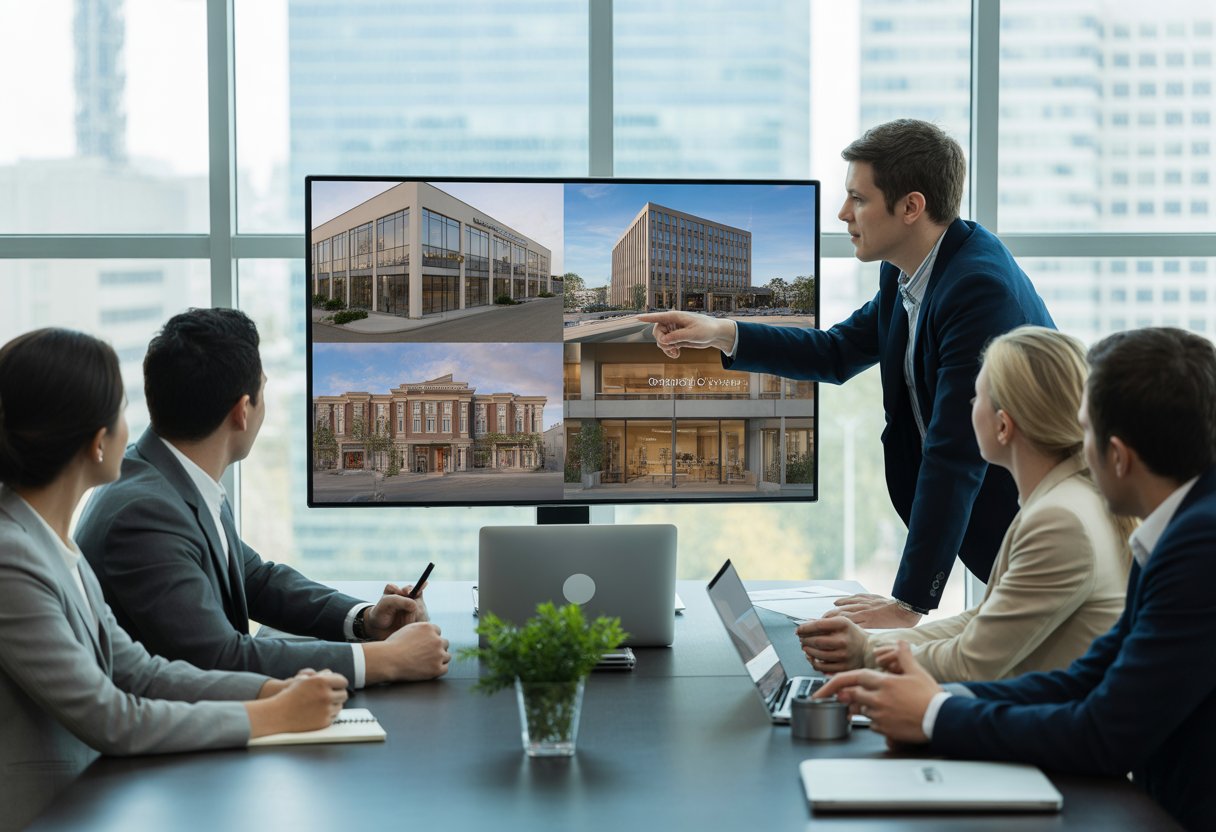
Decision-makers in commercial real estate now research and evaluate properties online, with 100% of recent buyers starting their search digitally. Videos provide the dynamic showcase needed to communicate complex features like floor plans, ceiling heights, and location advantages that photos cannot effectively convey.
This guide covers the strategic implementation of video marketing for commercial real estate, including video formats, production techniques, distribution platforms, and measurement strategies. Agents and firms will find actionable approaches to create compelling commercial real estate videos that generate qualified leads and accelerate transaction timelines.
Key Takeaways
- Commercial real estate videos generate significantly more inquiries and faster sales compared to traditional property listings
- Property tours, drone footage, and client testimonials represent the most effective video types for showcasing commercial spaces
- Strategic distribution across platforms like YouTube and social media, combined with proper SEO optimization, maximizes video marketing ROI
The Role of Video Marketing in Commercial Real Estate

Video marketing now serves as a core component of commercial real estate strategies. CRE professionals use video to present properties with greater depth and to meet the expectations of buyers and tenants who want comprehensive digital experiences before making decisions.
Industry Impact and Trends
Video marketing is no longer optional in commercial real estate—it has become essential for brokers, developers, and property owners across industrial, retail, and office sectors. The industry now favors data-enhanced video content that combines cinematic footage with real-time market insights.
CRE professionals integrate traffic counts, demographic data, zoning information, and property specifications directly into video presentations. This method enables decision-makers to access comprehensive information quickly.
Search engines prioritize video content for localized queries such as “warehouse for sale” or “retail space for lease.” Properties with embedded, optimized videos achieve higher organic traffic and improved search rankings.
Social media platforms including LinkedIn and Instagram have emerged as deal sources for CRE transactions. Short video teasers featuring aerial shots and data highlights attract qualified leads from investors and tenants who do not actively search traditional listing platforms.
Key Advantages for CRE Professionals
Real estate video marketing delivers benefits that directly impact transaction velocity and market reach. Videos provide virtual walkthrough experiences, allowing potential clients to evaluate spaces remotely and reducing unqualified site visits.
Primary advantages include:
- Expanded reach: Videos distribute across multiple channels, from listing platforms to social media
- Faster deal cycles: Prospects arrive at property tours better prepared and closer to decision-making
- Enhanced credibility: Professional video content signals market expertise and property quality
- Cost efficiency: One video asset serves multiple marketing purposes across different platforms
CRE professionals use the format to showcase complex property features such as loading dock configurations, ceiling heights, and site access patterns. Videos in commercial real estate marketing demonstrate spatial relationships and property flow more effectively than photos.
Influence on Buyer and Tenant Decisions
Industry research shows that 84% of commercial buyers prefer video walkthroughs before scheduling in-person visits. This preference changes how CRE professionals approach property marketing and client engagement.
Video content allows prospects to eliminate unsuitable properties early in their search. Buyers and tenants can evaluate multiple properties remotely and reserve site visits for serious contenders that meet specific criteria.
Out-of-market investors and national tenants benefit from videos when evaluating multiple locations. Videos provide consistent property information regardless of geographic distance or time zone.
Short attention spans in commercial transactions make video length critical. The most effective property videos run under two minutes, delivering essential selling points and data upfront. This format respects decision-makers’ time while providing sufficient detail for initial evaluation.
Types of Commercial Real Estate Videos
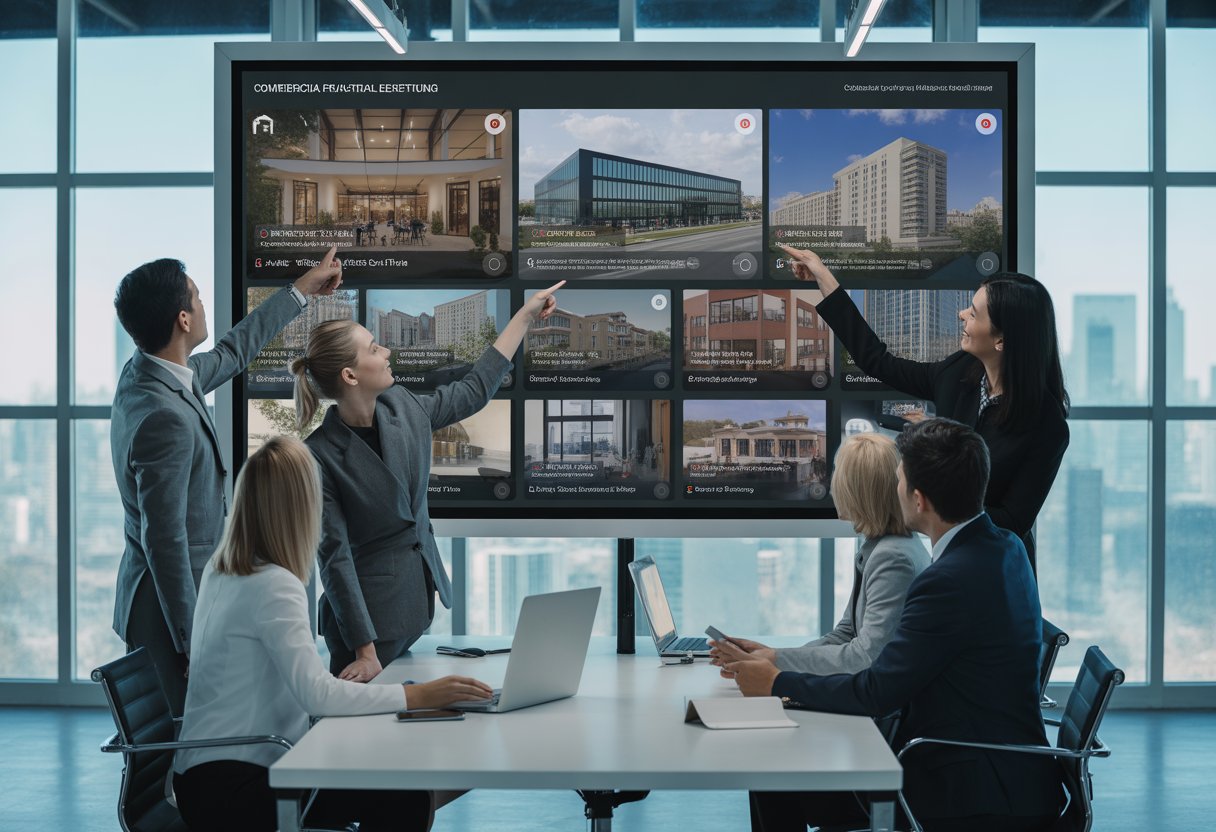
Commercial real estate professionals rely on three primary video formats to showcase properties: property walkthroughs, virtual tours, and drone footage. Property walkthroughs provide guided tours of interior spaces, virtual tours offer interactive 3D experiences, and drone footage captures expansive aerial perspectives of buildings and surrounding areas.
Property Walkthroughs
Property walkthroughs guide viewers through a commercial space room by room. These videos use steady camera movement to replicate how a prospective buyer or tenant would naturally explore the property.
A professional walkthrough highlights features such as ceiling heights, loading docks, office layouts, and conference rooms. Narration or on-screen text points out details like square footage, building materials, and recent renovations. This format works well for office buildings, retail spaces, and industrial warehouses where buyers need to understand flow and functionality.
The most effective property walkthroughs maintain a consistent pace and focus on features that matter to the target audience. They use stable footage and proper lighting to enhance the property’s appeal. Many commercial real estate professionals use these video tours as a primary marketing tool because they provide comprehensive property information in an accessible format.
Virtual Tours and 3D Showcases
Virtual tours give viewers interactive control over their experience. Unlike linear walkthroughs, these 3D showcases allow users to navigate through spaces at their own pace, zoom in on specific features, and view properties from multiple angles.
360-degree cameras or specialized scanning equipment create immersive experiences. Viewers can click through rooms, measure distances, and explore properties as if physically present. This approach helps remote investors and out-of-state tenants make decisions without traveling to the property.
Virtual tour technology now offers dollhouse views that display entire floor plan layouts. These tools integrate with listing websites and can be accessed on desktop computers, tablets, and smartphones. The format adds value for large commercial complexes where buyers need to understand spatial relationships between areas.
Drone and Aerial Footage
Drone footage provides perspectives that traditional cameras cannot achieve. Aerial views showcase the property’s location, surrounding infrastructure, parking capacity, and proximity to highways, retail centers, or residential areas.
Commercial properties benefit from aerial photography because context matters to buyers and tenants. Drone shots reveal traffic patterns, visibility from major roads, neighboring businesses, and expansion space. Industrial properties particularly benefit from this format as it demonstrates truck access, yard space, and site layout.
Professional drone operators capture smooth, cinematic footage that elevates the perceived value of commercial real estate listings. These videos often open marketing presentations to establish the property’s scale and positioning. Licensed pilots conduct commercial drone operations to meet professional standards and legal requirements.
Essential Elements of High-Performing CRE Videos
High-performing commercial real estate video production requires attention to narrative structure, technical quality, sound design, and brand consistency. Each element contributes to videos that engage prospects and drive measurable results.
Storytelling and Scriptwriting
Every commercial real estate video needs a clear narrative to guide viewers through the property’s value proposition. The script should open with the property’s strongest selling point—location, accessibility, or tenant mix—within the first 10 seconds to capture attention.
Effective scripts follow a three-part structure: establish context about the location and market position, highlight specific property features like square footage, ceiling heights, parking ratios, and traffic counts, and close with a call to action to schedule tours or request more information.
Scripts avoid industry jargon that could confuse tenants or investors unfamiliar with technical terms. They focus on business outcomes—how the space solves problems, supports operations, or positions tenants for growth. Property videos include data points like daily traffic counts, nearby anchor tenants, and zoning classifications to help decision-makers evaluate suitability without further research.
Lighting and Camera Techniques
Professional lighting distinguishes institutional-quality presentations from amateur footage. Interior spaces require three-point lighting setups to eliminate shadows and accurately represent ceiling heights and column spacing. Balance natural and artificial light to maintain consistent color temperature throughout the video.
Camera movements should have purpose and stability. Use smooth gimbal shots for walkthroughs and locked-down shots to showcase features such as loading docks or HVAC systems. Drone footage provides aerial context, revealing access points, parcel boundaries, and proximity to major roadways.
Wide-angle lenses capture full room dimensions but can distort proportions if overused. Standard focal lengths between 24mm and 50mm offer more accurate spatial representation. Video production teams shoot multiple angles of key features to provide editors with options during post-production.
Key camera considerations:
- 4K resolution minimum for future-proof deliverables
- 60fps capture for smooth slow-motion options
- HDR capability for high-contrast environments
- Stabilization for professional polish
Audio and Editing Best Practices
Clean audio quality is critical. Keep background music below voiceover levels—typically 15-20 decibels lower—to ensure script clarity. Voiceover artists with commercial experience deliver better pacing and emphasis than automated narration for properties above $5 million.
Edit rhythm to match the property type. Industrial facilities benefit from longer shots that let viewers absorb warehouse scale and clear heights. Retail spaces require faster cuts that reflect the energy of active commercial corridors. Most commercial real estate video marketing performs best at 90-120 seconds, though complex properties may require extended formats.
Color grading ensures consistent visual tone across different lighting conditions. Use subtle corrections to keep properties aspirational but realistic. Graphics overlays displaying square footage, zoning information, and available suite ranges add data context without repeating voiceover content.
Branding Integration
Integrate video branding so it supports rather than overshadows property content. Place company logos in lower-thirds during the first five seconds and final ten seconds. Display brokerage contact information in end cards with a clear text hierarchy—agent name, phone number, and email.
Use brand colors to accent transitions and graphic elements without distracting from property visuals. Prioritize typography that remains readable across mobile devices, where commercial real estate video consumption continues to rise. Sans-serif fonts at a minimum of 24 points maintain legibility on smartphones.
Implement template systems to ensure consistent branding across multiple property videos while allowing for asset-specific customization. Limit branded intro sequences to three seconds before transitioning to property content. Develop style guides specifying music genres, color palettes, and graphic treatments to reinforce brand recognition across your video portfolio.
Distribution Channels and Platform Strategies
Match commercial real estate video content to platforms where decision-makers actively search for properties. Each distribution channel serves a distinct function, from embedding videos on listings to reaching prospects through social media or specialized CRE marketplaces.
Optimizing Videos for Websites and Listings
Embed videos directly on property websites and listing pages to increase engagement and time spent reviewing assets. Videos on commercial real estate listings generate significantly more inquiries than listings without video content. Ensure the video player loads quickly to avoid slowing page performance.
Place transcripts below embedded videos to improve accessibility and provide indexable text for search engines. Video sitemaps help search engines discover and index video content. Video tours enable remote viewing, reducing unnecessary site visits and qualifying leads before in-person tours.
Leveraging Social Media Networks
Use social media platforms to reach targeted audience segments in commercial real estate. YouTube works well for longer property tours (2-5 minutes) and offers strong search optimization through titles and descriptions.
Facebook provides broad reach through targeted ads and commercial real estate groups. Instagram Reels is effective for 30-60 second highlights optimized for mobile. Select platforms based on your audience demographics and content type.
Adopt vertical video formats (9:16 aspect ratio) for mobile-first platforms. Use captions to boost engagement, as many users watch videos with sound off. Maintain consistent posting schedules to build audience expectations and improve algorithm performance across social channels.
Utilizing CRE Marketplaces like LoopNet
Leverage specialized commercial real estate marketplaces like LoopNet to connect listings with qualified investors, tenants, and buyers. These platforms attract users who have specific transaction intent.
Integrate videos within LoopNet property listings to showcase spaces alongside photos and specifications. Marketplace videos help properties stand out in crowded search results with multiple comparable listings.
Take advantage of CRE marketplaces’ built-in professional audiences. Highlight location advantages, square footage, zoning details, and unique features that align with search criteria used by marketplace visitors.
Measuring Success and Enhancing ROI
Track specific metrics and test strategies to quantify video performance and guide business decisions. Combine quantitative analytics with qualitative feedback for a comprehensive understanding of campaign results.
Key Performance Metrics
Go beyond view count and monitor metrics that connect video marketing to business outcomes.
Essential metrics include:
- Engagement rate: Watch time percentage and completion rate
- Click-through rate: Number of viewers who take action after watching
- Lead generation: Form submissions, contact requests, and demo bookings
- Cost per lead: Total video production and distribution costs divided by leads generated
- Revenue attribution: Closed deals linked to specific video touchpoints
Calculate ROI using the formula: (Total Return – Total Cost) ÷ Total Cost × 100. For example, a property tour video costing $5,000 that generates three lease inquiries worth $50,000 each delivers strong returns.
Leverage platform-specific metrics. YouTube offers watch time and traffic source data; LinkedIn provides demographic insights on professional viewers. Use UTM parameters on video links to track which videos drive website conversions.
A/B Testing and Analytics
Test different video elements to determine what resonates with commercial real estate audiences and refine campaigns based on performance data.
Experiment with video length, opening hooks, thumbnail images, and call-to-action placement. For example, a 90-second overview may outperform a 3-minute version depending on the property and target audience.
Use analytics to identify viewer drop-off points. If most viewers leave at the 30-second mark, revise the opening sequence. Heat maps reveal which video sections generate the most interest.
Testing framework:
- Change one variable at a time
- Run tests for a minimum of two weeks
- Require statistical significance before acting on results
- Document outcomes for future campaigns
Split test ad spend across platforms to identify the most cost-effective channels. For instance, LinkedIn may yield higher-quality leads for office spaces, while YouTube may deliver broader reach for retail properties.
Client Testimonials and Case Studies
Testimonial videos strengthen credibility and influence decision-making. Prospective tenants and buyers place greater trust in peer experiences than in marketing claims.
Effective testimonial videos highlight specific details. For example, a tenant describing how a warehouse’s loading dock configuration improved their logistics efficiency provides actionable insight for other prospects.
Case study videos show measurable outcomes from previous transactions. For instance, a broker can highlight how video marketing helped lease a vacant office building within 60 days, sharing view counts, inquiry numbers, and final lease terms. These examples demonstrate capability and educate prospects about the process.
Record testimonials immediately after successful deals to capture authentic enthusiasm. Brief interviews of 3-5 minutes focused on challenges, solutions, and concrete results provide valuable footage for future marketing.