
Real Estate Photography: Essential Techniques and Services
Real estate photography creates the initial visual impact for property listings, directly affecting both sale speed and final price. Professional real estate photography captures properties in their best light using specialized equipment, lighting techniques, and composition strategies to showcase homes to potential buyers online and in print materials. The difference between amateur snapshots and professional property images can mean thousands of dollars in final sale price and weeks off market time.
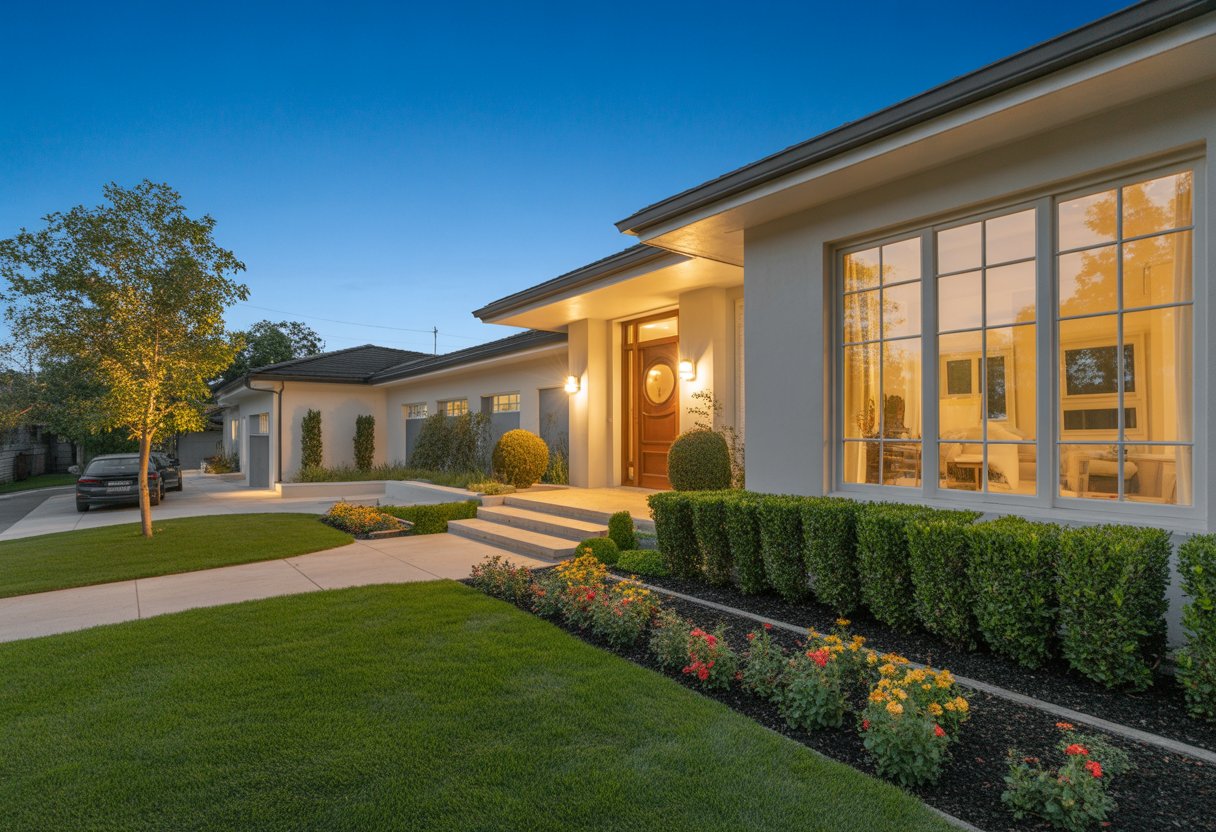
Mastering the fundamentals of real estate photography requires both technical skills and compositional awareness. Investors and professionals need the right camera equipment, including wide-angle lenses and tripods, and must know how to manage lighting challenges for both interior and exterior shots. The objective is to present each space accurately while making properties appear inviting and spacious.
Modern professional real estate photography services now include video tours, drone footage, and 3D virtual walkthroughs. Real estate professionals who master these techniques can differentiate their listings in a crowded market.
Key Takeaways
- Professional real estate photography uses specialized equipment and techniques to capture properties in ways that attract buyers and speed up sales
- Proper lighting, composition, and vertical alignment are essential technical skills for creating effective interior and exterior property images
- Modern real estate photography services now include photos, videos, aerial drone footage, and virtual tours delivered within 24 hours
Foundations of Real Estate Photography
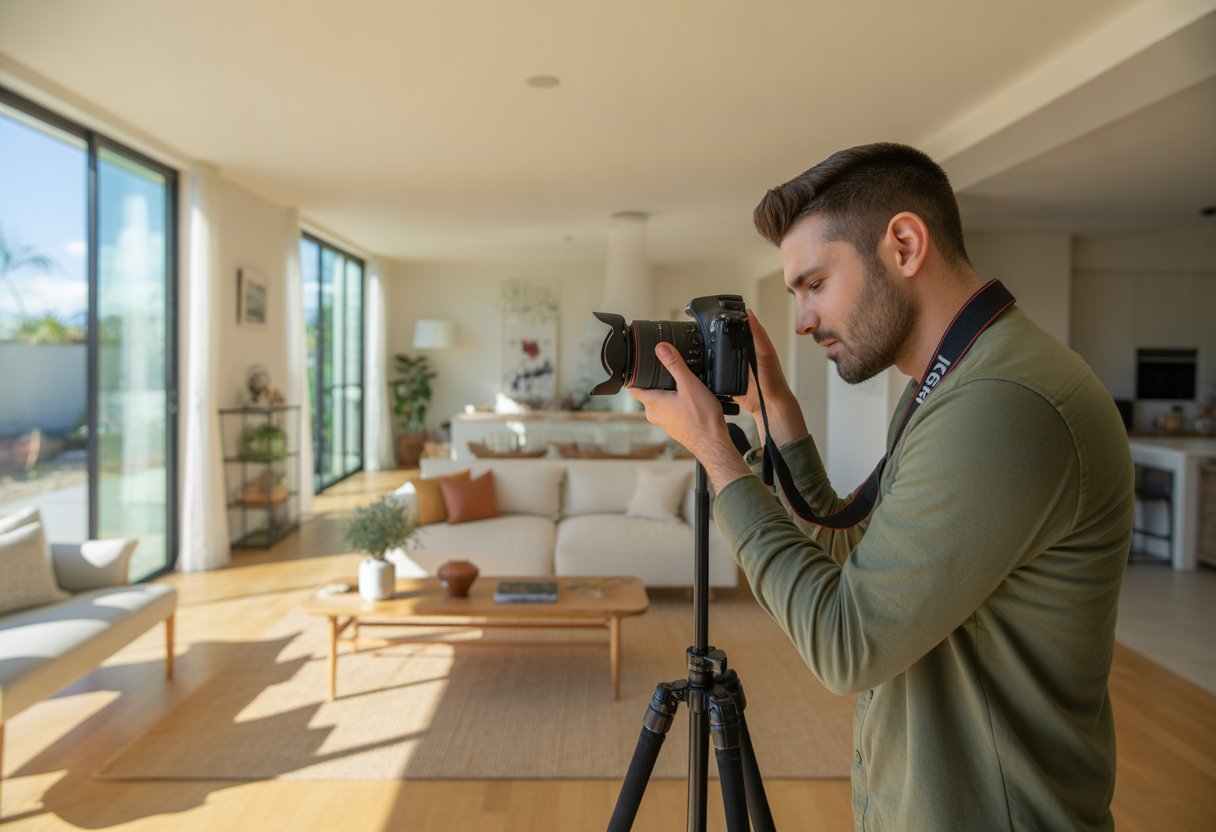
Successful property photography depends on specific technical equipment, practiced shooting methods, proper light management, and deliberate framing. Mastering these fundamentals delivers images that drive sales.
Core Equipment and Setup
Your camera equipment forms the backbone of professional real estate photography. A full-frame DSLR or mirrorless camera provides the sensor size necessary for high image quality in varied lighting conditions.
The wide-angle lens is essential for property interiors. Most real estate photographers use focal lengths between 16-24mm to capture entire rooms in single frames. Lenses in the 16-35mm range offer versatility across different room sizes.
A sturdy tripod eliminates camera shake and enables techniques like HDR bracketing. Use a tripod for every interior shoot to maintain consistent framing and capture multiple exposures at identical angles.
Additional equipment considerations:
- Tilt-shift lens: Controls perspective distortion in architectural shots
- External flash: Fills shadows and balances mixed lighting
- Strobes: Provides powerful, controllable light for larger spaces
- Remote trigger: Prevents camera movement during exposure
Prioritize reliability in your gear bag. Professional photographers carry backup bodies and multiple lenses to handle equipment failures during scheduled shoots.
Key Shooting Techniques
HDR photography dominates modern real estate photos by capturing detail in both bright windows and dark corners. Shoot three to five bracketed exposures at different values, then merge them during editing to produce balanced images with a full tonal range.
Shoot at eye level, approximately 5 feet high, to present rooms from a natural perspective. This height prevents distortion and helps buyers visualize themselves in the space. For exterior shots, position yourself to showcase the front elevation while including landscaping and context.
Essential shooting workflow:
- Set camera to aperture priority mode at f/8-f/11
- Use lowest native ISO (typically 100)
- Bracket exposures in 2 EV increments
- Shoot in RAW format for maximum editing flexibility
- Capture vertical shots for two-story spaces
Stage each room by turning on all lights, opening blinds, and removing clutter. Schedule shoots during daylight hours to take advantage of natural light, which supplements interior lighting and creates inviting spaces.
Lighting and Exposure Mastery
Natural light produces appealing real estate photos when balanced with interior lighting. Window light provides soft, directional illumination but can create exposure challenges if much brighter than interiors.
Adjust exposure compensation to achieve proper brightness in-camera. Your camera’s light meter may underexpose bright rooms or overexpose darker spaces, so manual adjustment is often necessary for accurate results.
Lighting strategies for interior photography:
| Situation | Approach |
|---|---|
| Bright windows | Bracket exposures, blend in post |
| Dark rooms | Add flash or increase ambient lighting |
| Mixed color temperatures | Shoot RAW, adjust white balance in editing |
| Evening exteriors | Shoot during blue hour for warm interior glow |
Use flash photography to supplement existing light. Bounce flash off ceilings or walls to create soft, even lighting and eliminate harsh shadows. Professional real estate photographers often deploy multiple off-camera flashes to illuminate large spaces uniformly.
Check your camera’s histogram to confirm proper exposure on location. Clipped highlights in windows or blocked shadows in corners indicate exposure problems; adjust with bracketing or additional lighting as needed.
Composition and Framing
Strong composition directs attention to property features and builds an emotional connection with spaces. Frame shots to emphasize room flow, highlight architectural details, and demonstrate how spaces function for daily living.
Apply the rule of thirds by placing key elements along grid intersections rather than centering them. Position doorways, windows, or focal points like fireplaces at these intersections to create balanced, dynamic images.
Composition techniques that strengthen real estate photos:
- Leading lines: Use hallways, countertops, or architectural elements to guide eyes through images
- Depth: Include foreground elements like furniture to create a three-dimensional feel
- Symmetry: Center on architectural features in formal spaces
- Vertical correction: Keep walls perfectly vertical to prevent distortion
Shoot corners rather than flat walls to show room dimensions and spatial relationships. Corner shots reveal two walls and create depth, helping buyers understand room size and layout more effectively than single-wall compositions.
Edit images in Lightroom and Photoshop to enhance composition through cropping and perspective correction. Professional editing removes minor distractions, straightens verticals, and optimizes colors while maintaining a realistic representation. Export final images as high-quality JPEG files sized for MLS listings and marketing materials.
Modern Real Estate Photography Services and Solutions
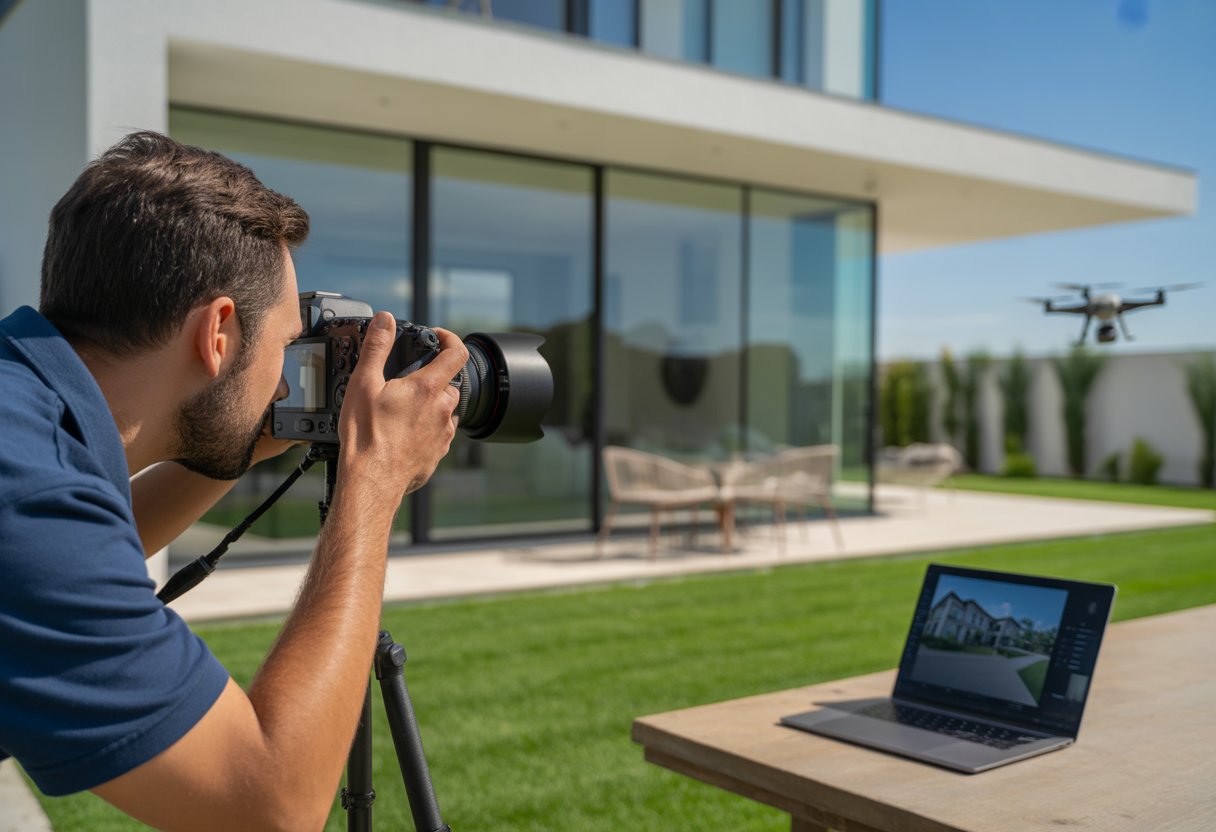
Today’s real estate photography now includes drone footage, immersive 3D experiences, and digital marketing tools. These services help real estate professionals showcase listings more effectively and attract qualified buyers faster.
Drone and Aerial Photography
Drone photography has become essential for capturing property exteriors, lot sizes, and neighborhood context. A camera drone offers perspectives that ground-level shots cannot, revealing roof conditions, landscaping layouts, and proximity to amenities.
Aerial drone services now come standard with many real estate photography packages. Drone photos highlight waterfront access, large acreages, and commercial properties where scale matters. Drone video adds dynamic movement to engage viewers browsing listings online.
Real estate drone photography typically costs between $75 and $200 as an add-on. Licensed pilots ensure compliance with FAA regulations and deliver professional footage. This investment enables buyers to visualize entire properties before scheduling showings.
Virtual Tours and 3D Solutions
Interactive tours allow potential buyers to explore properties remotely at their own pace. 3D tours create immersive experiences that showcase room layouts, flow between spaces, and property dimensions more effectively than static images.
3D interactive tours integrate floor plans with navigable walkthroughs. Buyers click through rooms, zoom into details, and gain a realistic sense of space without an in-person visit. This technology reduces unnecessary showings while increasing qualified buyer interest.
Virtual staging digitally furnishes empty properties to help buyers envision possibilities. It costs significantly less than physical staging and offers unlimited style options. Many real estate photography services bundle virtual staging with other offerings for comprehensive marketing packages.
Floorplan creation complements virtual tours by providing scaled layouts. These diagrams display room dimensions, total square footage, and spatial relationships that photos alone cannot convey.
Property Listing Enhancements
Professional property photos form the foundation of effective real estate listings. High-quality listing photos attract more views, generate more inquiries, and help properties sell faster than amateur smartphone images.
Key enhancements include:
- HDR photography that balances interior and window lighting
- Twilight shots that showcase exterior ambiance
- Detail photos highlighting premium finishes
- Wide-angle compositions maximizing perceived space
Branded property pages give listings a professional web presence beyond MLS platforms. These dedicated pages combine photos, videos, virtual tours, and property details in one shareable link. Real estate professionals use them across social media, email campaigns, and text messages to homeowners and prospective buyers.
Photo editing services transform raw images into polished marketing assets. Editors adjust exposure, straighten lines, remove distractions, and enhance colors to present properties at their best while maintaining accuracy.
Business and Client Essentials
Reliable turnaround times directly impact your ability to meet listing deadlines. Most services deliver edited photos within 24 to 48 hours after shoots. HomeJab provides 24-hour delivery on all media types, including photos, videos, and 3D tours.
Efficient booking systems allow you to schedule appointments in under two minutes through online platforms or mobile apps. National providers offer consistent service across multiple markets, supporting portfolio growth beyond a single region. Responsive customer service resolves scheduling conflicts and accommodates last-minute changes, minimizing disruption to your operations.
Partnering with full-service real estate photography providers streamlines the process for agents and property managers. These companies maintain vetted photographer networks, standardized quality controls, and backup coverage when individual photographers are unavailable. You maintain consistent marketing collateral across all properties, regardless of location or type.
Transparent pricing supports accurate marketing budget planning. Package deals that include photography, drone footage, virtual tours, and floor plans often reduce overall costs compared to ordering services individually.