
Virtual Home Tours with AI: Your Competitive Edge
Virtual home tours have redefined property viewing by merging immersive technology with artificial intelligence to create interactive experiences accessible from any location. AI-powered virtual tour tools enable real estate professionals to generate comprehensive virtual property tours in minutes using standard photos, eliminating the need for costly 360-degree cameras or specialized equipment. The technology analyzes images, establishes spatial relationships, and builds navigable environments that closely replicate in-person walkthroughs.

AI-powered virtual tours now offer personalized property viewing experiences that adapt to individual buyer interests. These systems use machine learning to determine which rooms and features attract attention, then adjust future tours to emphasize similar elements. This approach saves time for buyers and agents, and expands property reach to international audiences through features such as real-time translation.
With AI virtual tour creators, you can explore multiple properties remotely, visualize different design options through augmented reality, and receive instant answers to questions via AI chatbots. This technology provides 24/7 property access, removes geographical limitations, and creates opportunities for more efficient sales cycles and broader market exposure.
Key Takeaways
- AI virtual tour software generates immersive property experiences from standard photos without requiring expensive specialized equipment
- Machine learning personalizes tours based on viewer behavior and provides real-time adaptations to highlight relevant features
- Virtual tours expand property accessibility globally while offering agents valuable data insights about buyer preferences and engagement
Core Technologies Behind Virtual Home Tours With AI
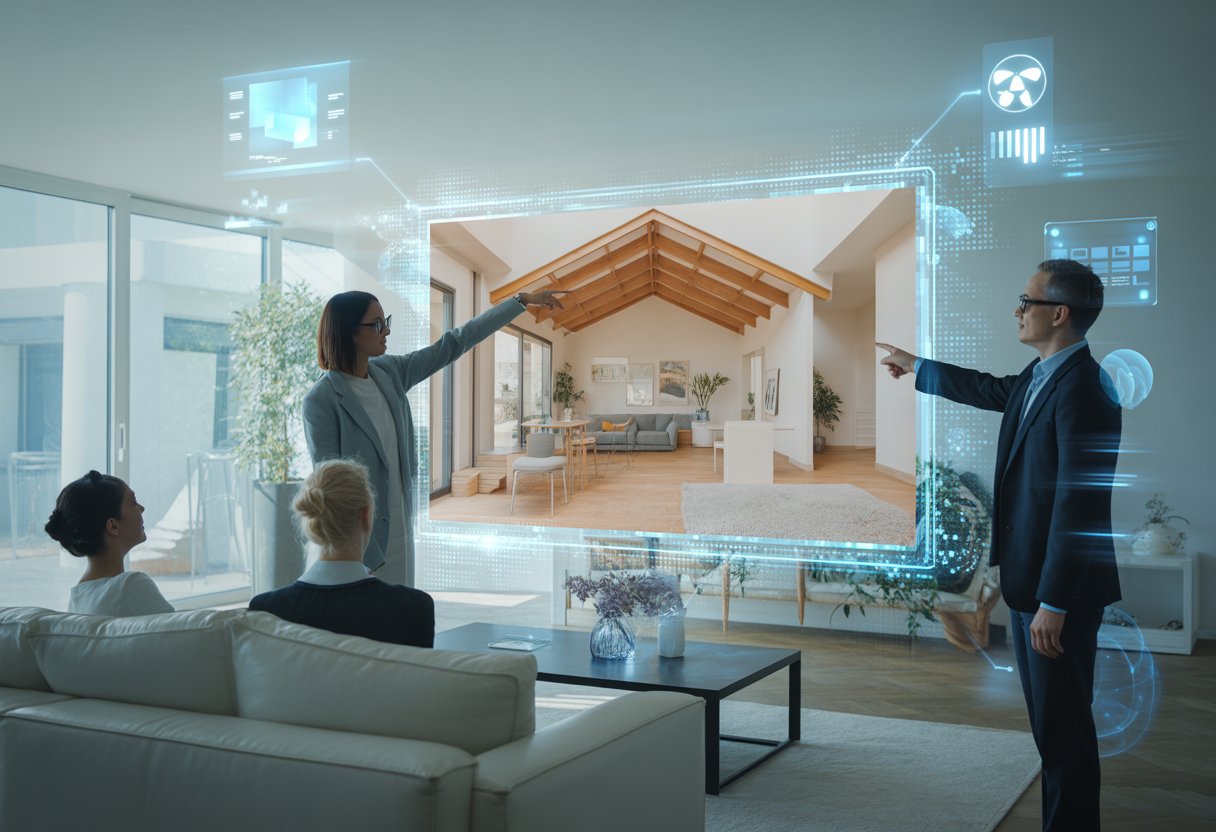
AI-powered virtual tours rely on interconnected technologies that automate property visualization, from 3D scene construction to intelligent enhancement of visual assets. These systems combine machine learning models, automated processing workflows, and advanced rendering capabilities to convert raw property data into immersive viewing experiences.
Artificial Intelligence and Generative AI in Virtual Tours
AI forms the foundation for modern virtual tour platforms by automating tasks that previously required manual effort. AI-powered virtual home tours analyze property images to enhance lighting, adjust colors, and improve sharpness. These systems use computer vision algorithms to identify rooms, architectural features, and spatial relationships within a property.
Generative AI expands capabilities by creating new content from existing property data. You can generate floor plans from photo sequences, create furnished versions of empty spaces, or produce marketing videos from static images. AI Virtual Staging lets you furnish vacant properties digitally in various styles, eliminating physical staging costs.
These AI systems also provide actionable insights by tracking viewer interactions, revealing which property features generate the most interest.
Automation and Model Training for Tour Creation
AI virtual tour creators use trained machine learning models to process and assemble tour components automatically. When you upload property photos, the system analyzes them to determine room types, dimensions, and optimal viewing angles. Model training on large real estate datasets enables the AI to recognize architectural elements and spatial patterns.
The workflow eliminates manual tasks such as image alignment, transition creation, and hotspot placement. You capture property images, and the AI manages stitching, navigation path generation, and interactive element placement. This reduces tour creation time and ensures consistency across listings.
3D Modeling and Scene Generation
3D modeling technology builds spatial representations of properties for free navigation. The process uses multiple photographs or specialized cameras to capture depth information and create accurate dimensional models. 3D virtual tours differ from 360 tours by allowing natural movement through spaces, not just static viewpoints.
AI identifies walls, floors, ceilings, and furniture placement from image data, constructing navigable 3D environments where you can measure distances, adjust viewing angles, and experience accurate spatial proportions. These models support dollhouse views and floor plan overlays for comprehensive layout understanding.
Integration of Video Generation and Voiceovers
Video generation transforms static tour elements into dynamic marketing content. AI Video Maker tools convert property images into walkthrough videos with smooth transitions and cinematic movements. You can customize pacing, camera angles, and visual effects without video editing expertise.
Voiceover integration adds narration to guide viewers through property features. AI-generated voices describe room dimensions, highlight upgrades, or explain neighborhood amenities in natural-sounding speech. You can select voice types and languages to match your target audience, delivering personalized tour experiences that combine visual immersion with informative audio commentary.
Features and User Experience in AI-Powered Virtual Home Tours
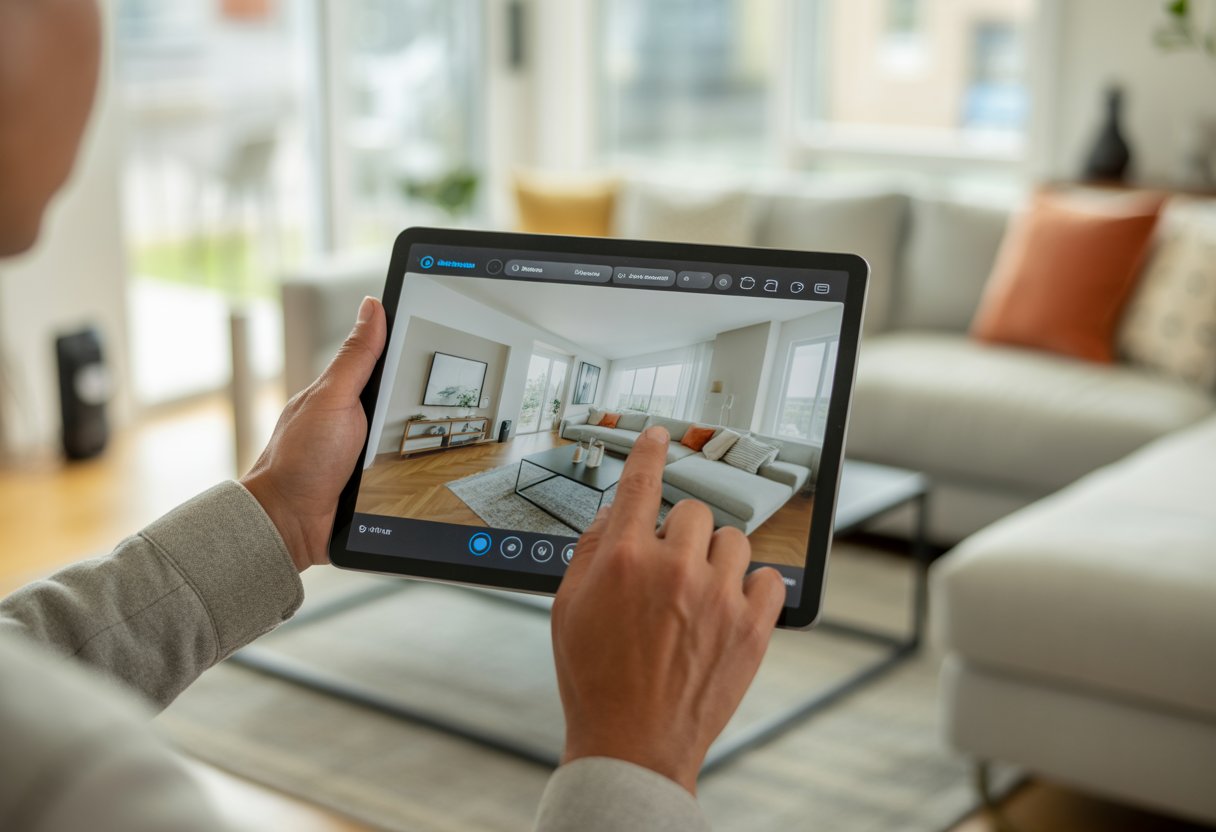
AI-powered tools make virtual home tours dynamic and personalized through interactive elements, custom branding, and integration with emerging technologies. These features allow you to explore properties on your terms while providing real estate professionals with advanced engagement tools.
Immersive and Interactive Elements
AI-powered virtual home tours offer immersive experiences through 360-degree views that enable self-directed navigation. You choose which rooms to examine and how long to spend in each space.
The technology uses neural radiance fields and photogrammetry to convert 2D photos into navigable 3D environments. You can zoom in on architectural details, rotate views to examine finishes, and move between rooms seamlessly.
Interactive tours incorporate dynamic lighting adjustments, showing properties at different times of day. You can evaluate how natural light impacts a living room in the morning versus evening, supporting better decision-making for buyers and investors.
Custom Branding and Virtual Staging
AI-powered virtual staging enables instant visualization of properties with different furniture arrangements and décor styles. You can swap flooring materials, change wall colors, or view rooms with various furniture configurations without incurring physical staging expenses.
Real estate agents incorporate logos, contact information, and neighborhood highlights directly into tours for consistent branding. The technology supports style-transfer models that apply themes such as modern minimalist, rustic, or contemporary to align with buyer preferences.
AI algorithms enable furniture and décor swaps in real time, allowing experimentation with materials and textures before making renovation or staging decisions. This feature adds particular value to high-end properties where luxury furnishings influence buyer perception.
Clickable Hotspots and User Engagement
Clickable hotspots embedded in virtual tours provide immediate access to property information. You can click on appliances for specifications, tap countertops for material details, or select rooms for square footage.
Interactive elements track engagement patterns, recording which features attract the most attention and how long users spend in each area. This data enables agents to identify buyer priorities and tailor follow-up communications for higher conversion rates.
AI-powered navigation allows direct jumps to specific rooms or previous locations. You can bookmark favorite spaces, compare different areas, or create custom tour sequences focused on features relevant to your investment or management criteria.
Personalization, Smart Home, and VR Integration
AI algorithms analyze user preferences and behaviors to personalize tours, emphasizing features that match individual criteria. The system learns from interactions, highlighting energy-efficient appliances for sustainability-focused users or showcasing storage solutions for those prioritizing organization.
Smart home features integrate into virtual tours, demonstrating connected devices such as thermostats, security systems, and lighting controls in operational contexts.
Virtual reality integration through headsets like Meta Quest or Apple Vision Pro delivers the most immersive viewing option, while retaining interactive elements and information available in browser-based tours.
The technology supports voice and text-based interactions, enabling users to ask questions like “What’s the kitchen square footage?” or “Show me properties with granite countertops” and receive immediate answers. Tours remain accessible 24/7 across web browsers, mobile devices, and VR platforms, so users can explore properties at their convenience.
Workflow: Creating and Optimizing Virtual Home Tours With AI
AI streamlines the process from uploading property photos to generating polished virtual walkthroughs that attract buyers and investors. The workflow covers visual asset preparation, tour customization, platform optimization, and performance data analysis for continuous improvement.
Photo and Floor Plan Input Preparation
Gather high-quality listing photos that showcase each room from multiple angles. Use well-lit images with minimal clutter to provide the AI with accurate data for processing.
Upload floor plans alongside photos to clarify spatial relationships between rooms. AI virtual tour creators combine these elements to build coherent navigation paths through the property.
Organize files by room or sequence before uploading to ensure smooth transitions in the virtual walkthrough. If you have video footage, include it to supplement still images.
Label each image clearly with room names or numbers. The AI uses these labels to generate logical flow patterns and create seamless movement between spaces in your virtual tour.
Tour Generation and Style Customization
After uploading your assets, select a visual theme that aligns with the property’s character. Apply aesthetics such as “modern minimalist” or “warm traditional” to enhance the tour’s appeal.
AI tools generate video walkthroughs with automated scene transitions that replicate natural camera movements. These platforms analyze spatial data to create professional-quality panning and zooming effects.
Customize interactive elements by adding clickable hotspots for details about fixtures, materials, or neighborhood amenities. Adjust the tour duration and pacing to emphasize key selling features.
Test multiple style variations to determine which presentation resonates with your target audience. Batch-process different versions to efficiently compare results.
Optimization for Listings and Sharing
Export virtual tours in formats compatible with major property listing platforms and social media channels. Most AI tools provide optimized file sizes that load quickly while maintaining visual quality.
Embed tours directly into your website or MLS listings using provided code snippets. Generate standalone links for email campaigns or text message sharing with potential buyers.
Add captions, music, or voiceovers to increase viewer engagement during the walkthrough. Some platforms allow you to customize branding elements such as logos and contact information overlays.
Create shortened highlight reels for social media platforms where attention spans are limited. Use these condensed versions to drive traffic to full-length property listings.
Data Insights and Cost Efficiency
Track viewer engagement metrics including watch time, click-through rates, and interactive hotspot usage. These insights identify which rooms generate the most interest and where viewers drop off.
Compare performance across different tour styles and property types to refine your content creation strategy. This approach helps allocate resources to the most effective presentations.
AI tools reduce production costs compared to hiring videographers and staging professionals for each property. Subscription-based pricing makes professional-quality tours accessible to a wide range of users.
Calculate cost savings by tracking time spent per tour versus traditional methods. Most users report reducing production time from days to hours while maintaining or improving quality standards.
Top Platforms and Real World Applications
AI-powered virtual tour platforms range from sophisticated 3D modeling systems to accessible smartphone-based tools, each serving specific needs across the real estate market. These technologies provide measurable benefits for real estate agents, property managers, and investors through reduced showing times and expanded property reach.
Leading Virtual Tour Software and Tools
Matterport leads with highly accurate 3D digital twins that offer walkthrough navigation, dollhouse views, and measurement tools. The platform supports multiple capture methods, from professional cameras to iPhones, adapting to various budgets.
Zillow 3D Home offers a free alternative that prioritizes listings on Zillow and Trulia. Create tours using panorama connections captured with a smartphone, though the platform lacks true volumetric modeling.
Kuula focuses on customizable 360-photo tours with extensive branding options and interactive hotspots. The platform delivers excellent image rendering at competitive pricing tiers.
CloudPano adds live-guided tour capabilities with real-time video sessions, lead capture forms, and white-label branding. Agencies focused on client conversion benefit from these features.
Real Estate Industry Impact
Virtual tours have changed how professionals market properties. Real estate teams now conduct remote showings that save hours of travel while reaching geographically distant prospects.
The technology reduces in-person showings by filtering out unqualified buyers. Prospective buyers gain better spatial understanding before scheduling physical visits, resulting in more serious inquiries.
Key metrics show:
- Listings with 3D tours receive higher engagement rates
- Virtual showings extend market reach beyond local boundaries
- Properties move through sales pipelines more quickly
Real estate agents using AI-powered virtual tour platforms report improved lead qualification and shorter vacancy periods. Data from the National Association of Realtors shows that buyers increasingly expect virtual tour options as standard listing features.
Benefits for Professionals and Homeowners
Virtual tours save time for both sellers and buyers. Real estate agents can present multiple properties to clients without coordinating overlapping schedules.
Homeowners reduce disruptions by limiting the number of in-person showings. Properties remain market-ready without repeated preparations for every walk-through.
Professional advantages include:
- Lower travel costs and mileage
- Greater capacity to serve more clients
- Enhanced marketing differentiation
- More qualified buyer interactions
Prospective buyers can view properties at their convenience, regardless of time zone. They can revisit tours, share links with stakeholders, and evaluate options before scheduling in-person visits. Relocating buyers, in particular, gain the ability to assess properties remotely without repeated travel.